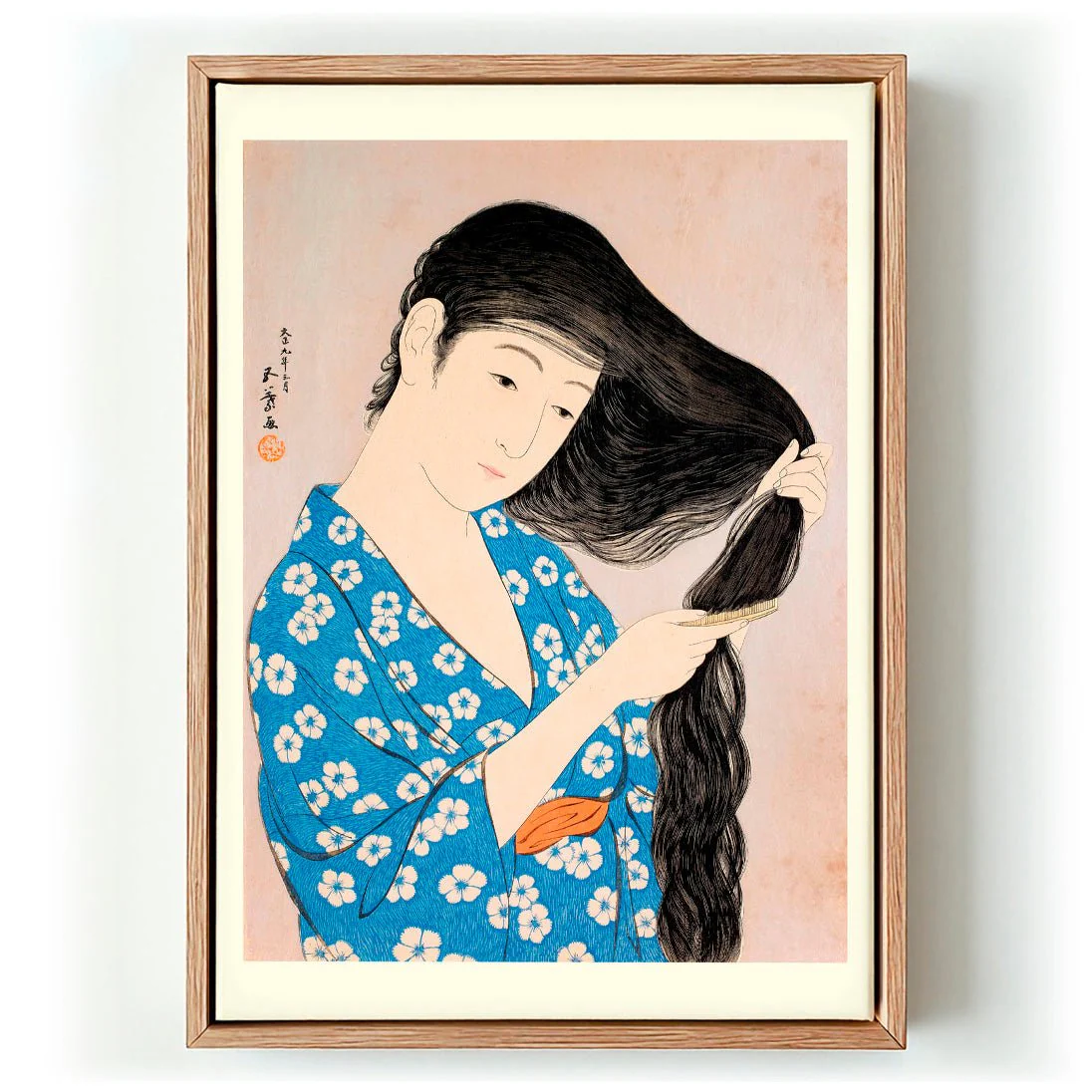
Woman Combing Her Hair by Gōyo Hashiguchi
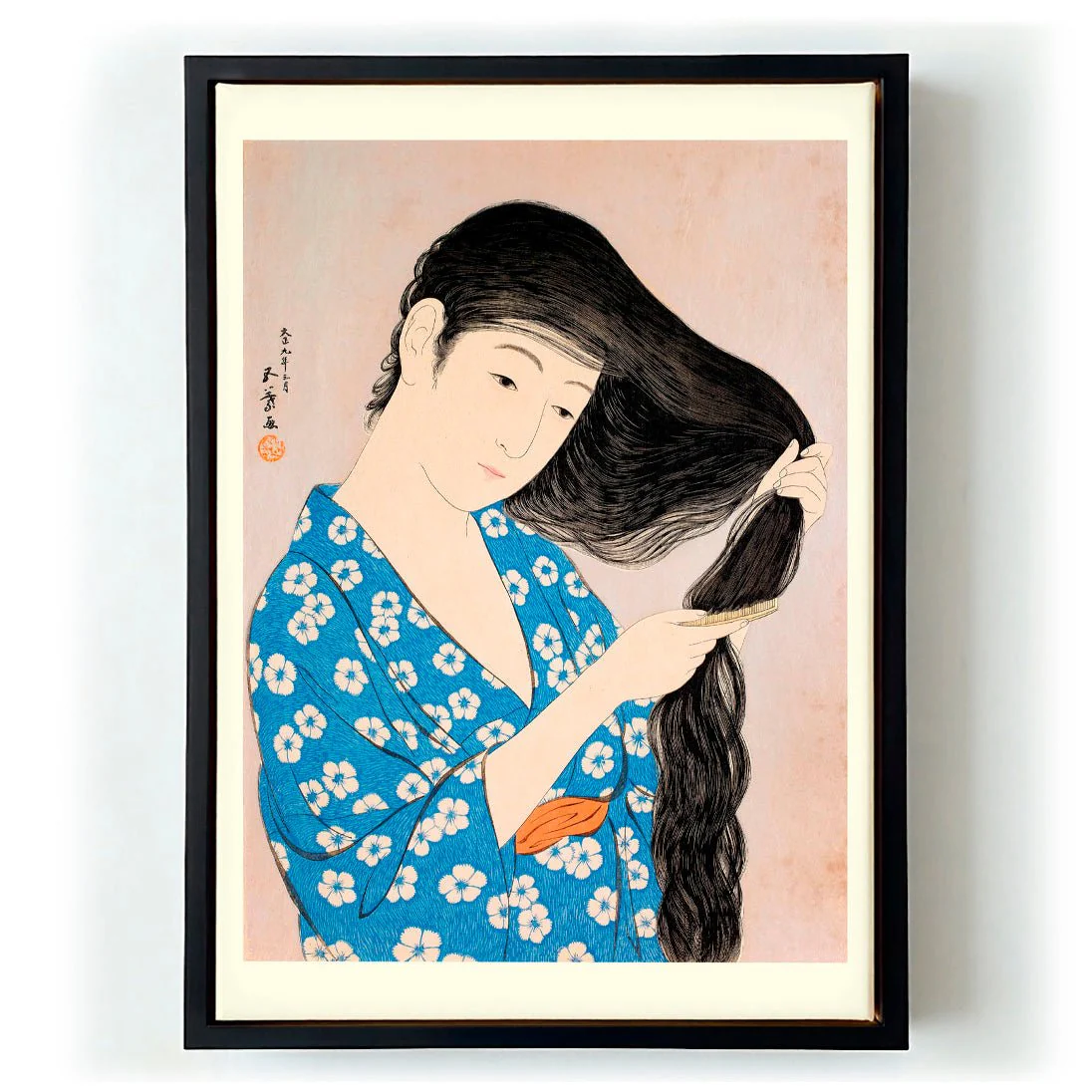
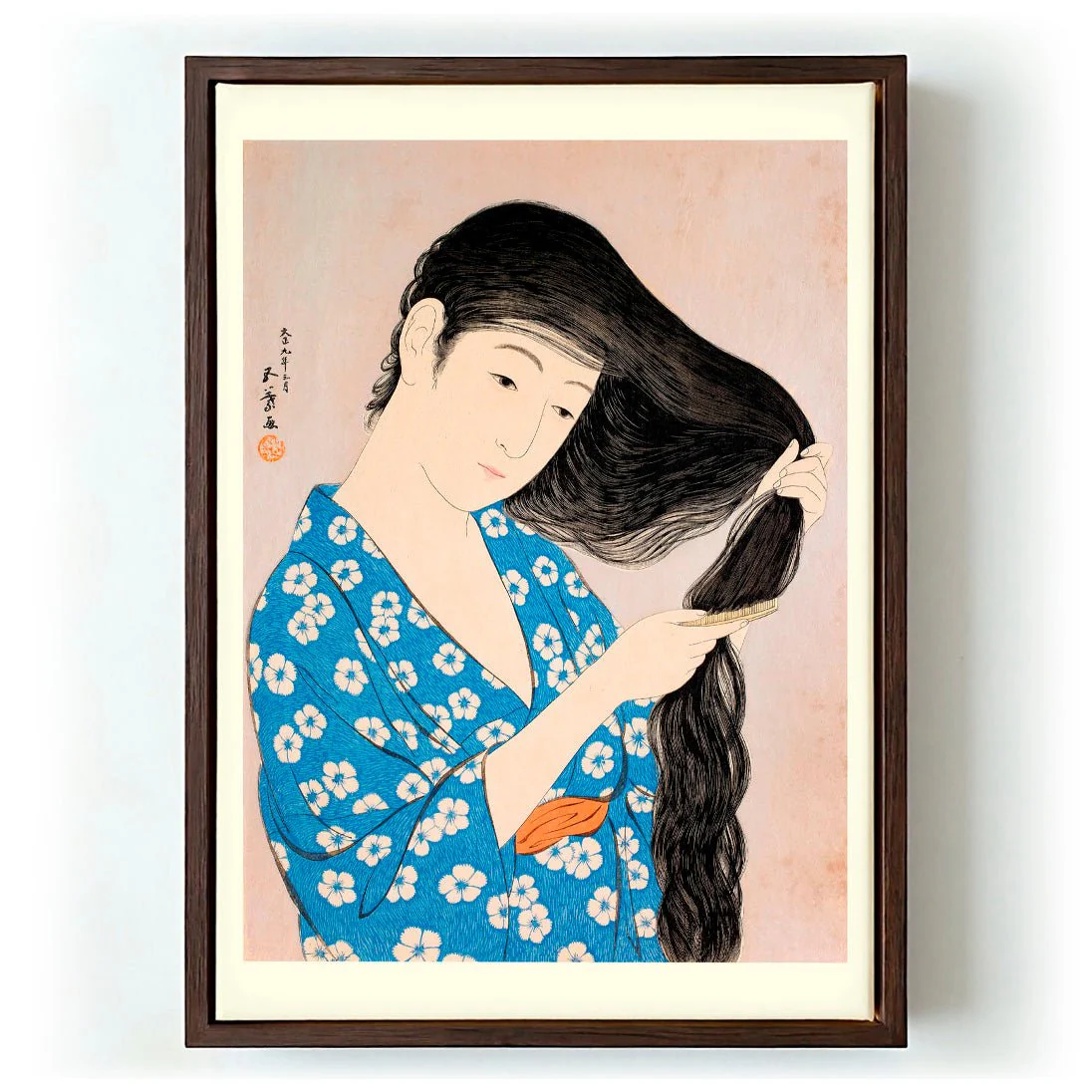
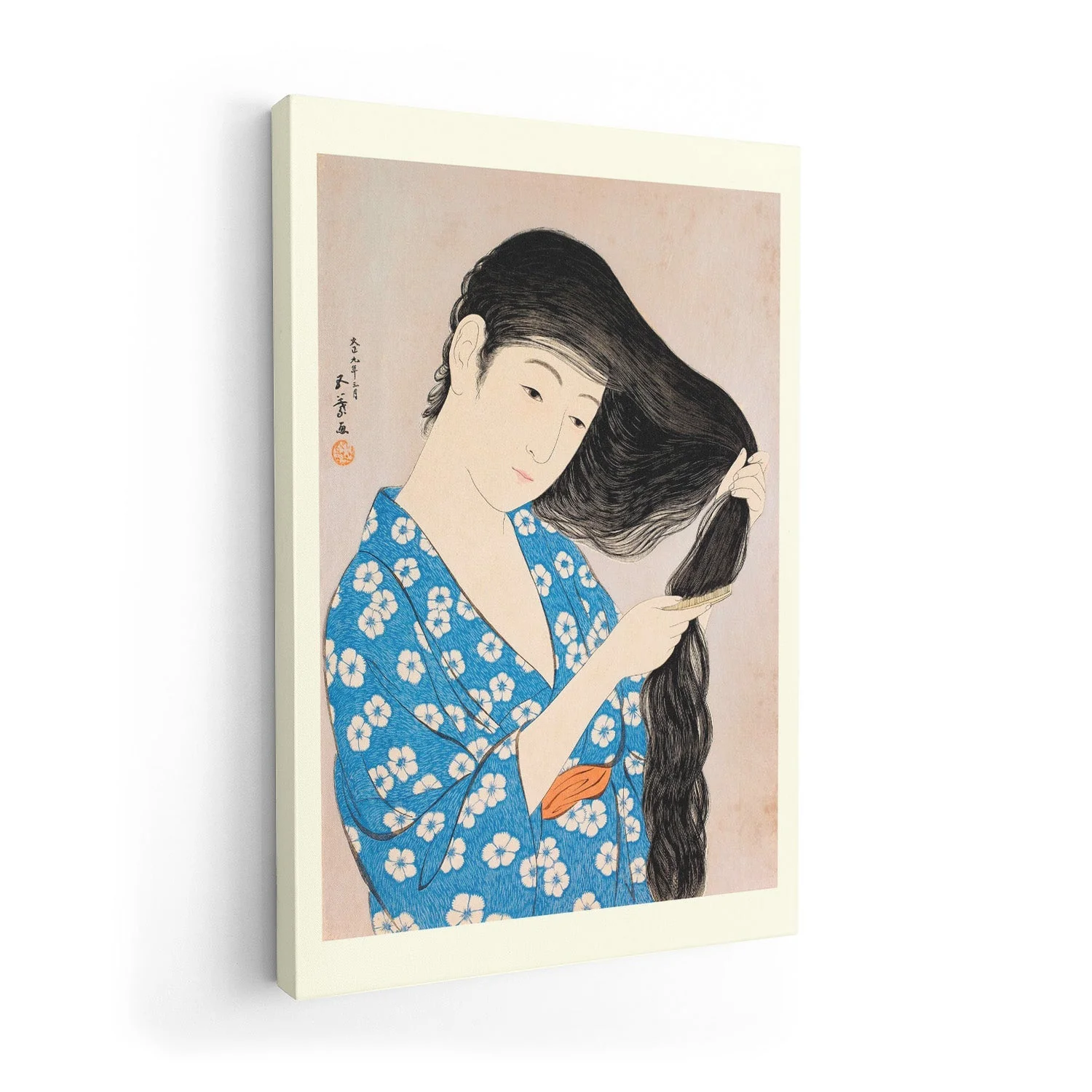
Gōyo Hashiguchi's Woman Combing Her Hair is one of the finest examples of late Meiji-era bijinga — portraiture centred on feminine grace and quiet introspection. The composition draws the eye inward: the figure's downward gaze and the rhythmic fall of her hair create a meditative stillness. Hashiguchi's line work is precise yet tender, and his palette — muted indigos, warm ivories, and deep blacks — reflects both the ukiyo-e tradition and his own modernist sensibility. The negative space is purposeful, allowing the figure to breathe without isolation.
On canvas, the texture adds a subtle warmth that heightens every delicate brushstroke and ink line. The depth of the tonal contrasts becomes more present, giving this Japanese canvas print a quiet, gallery-worthy presence on the wall.
Original: $38.34
-65%$38.34
$13.42More Images
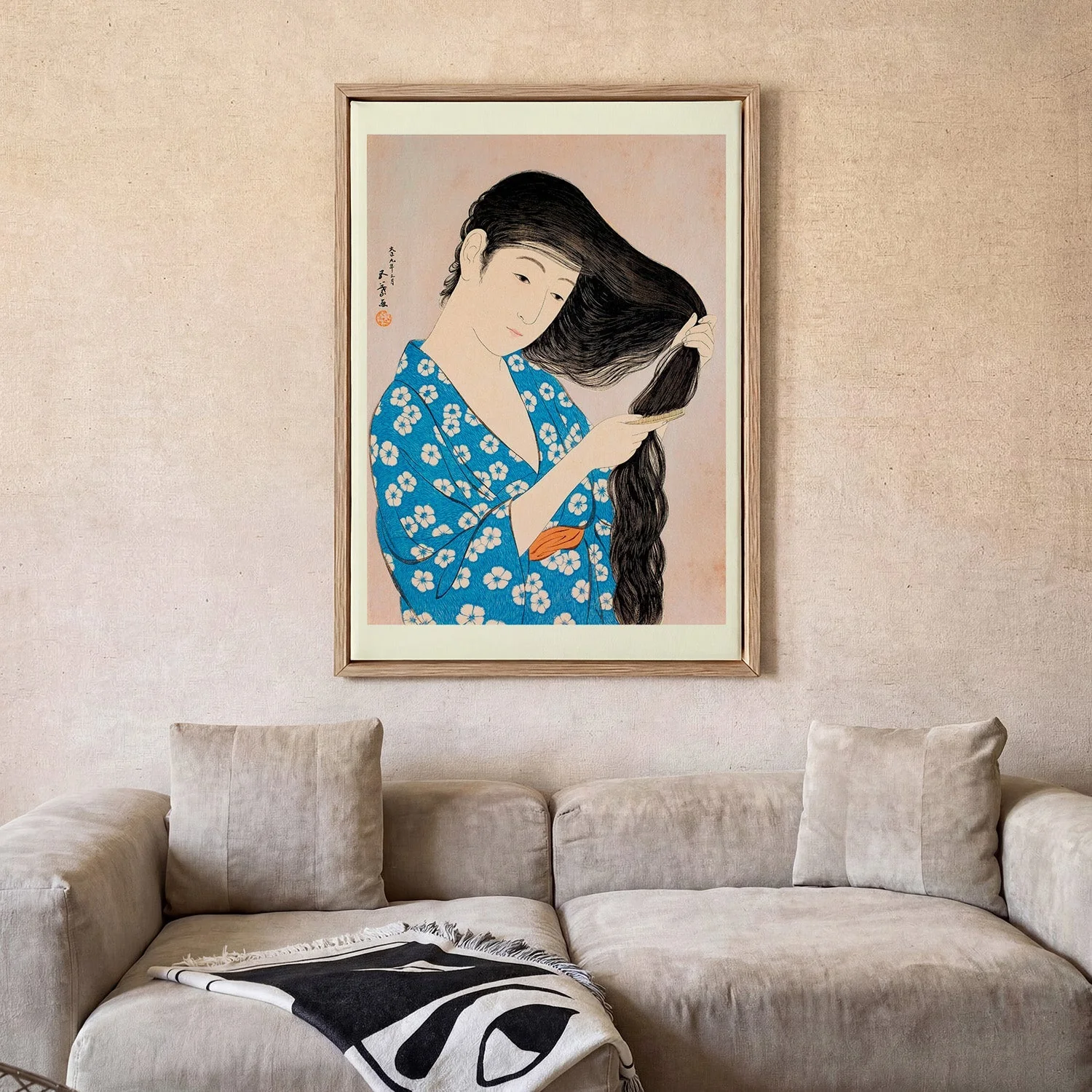
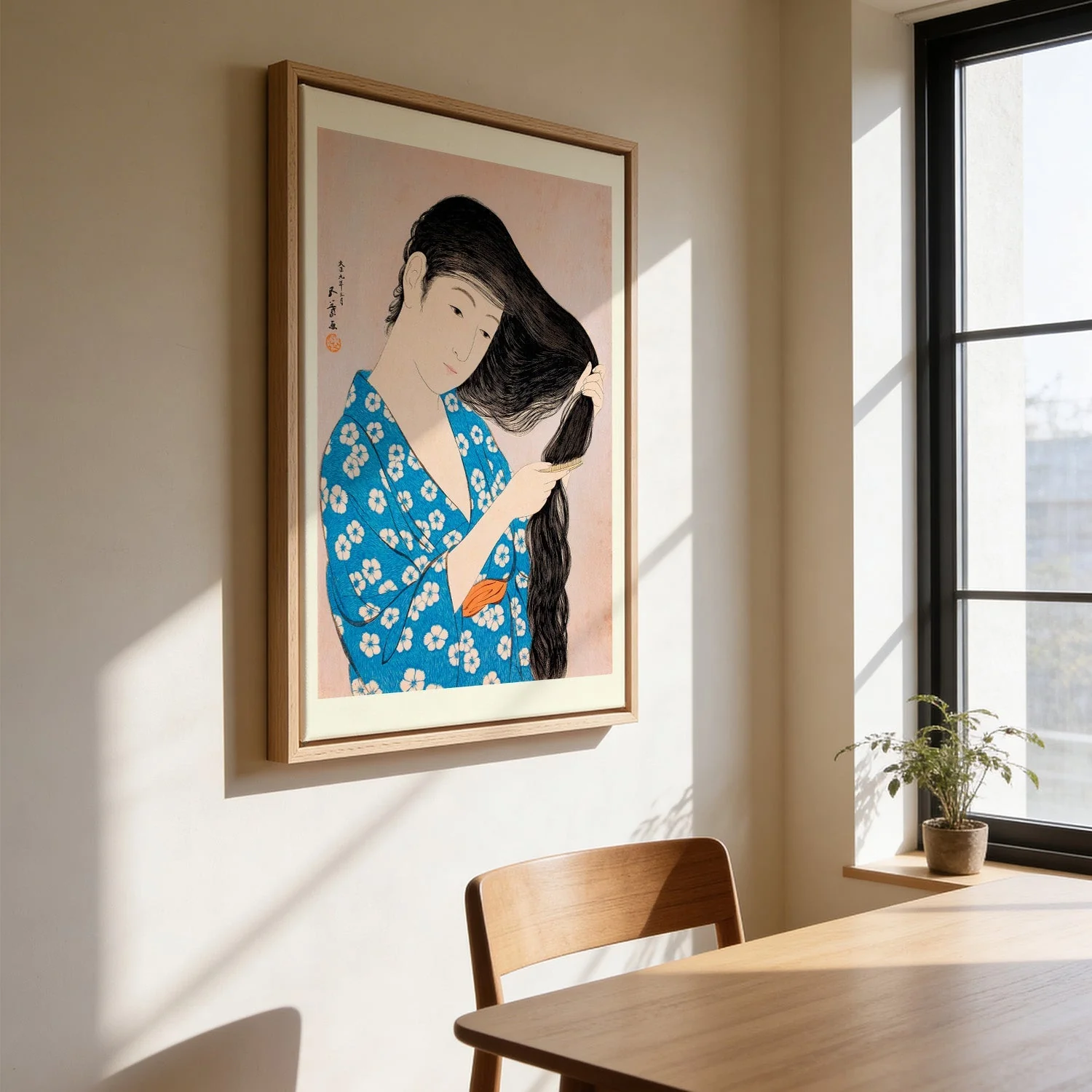
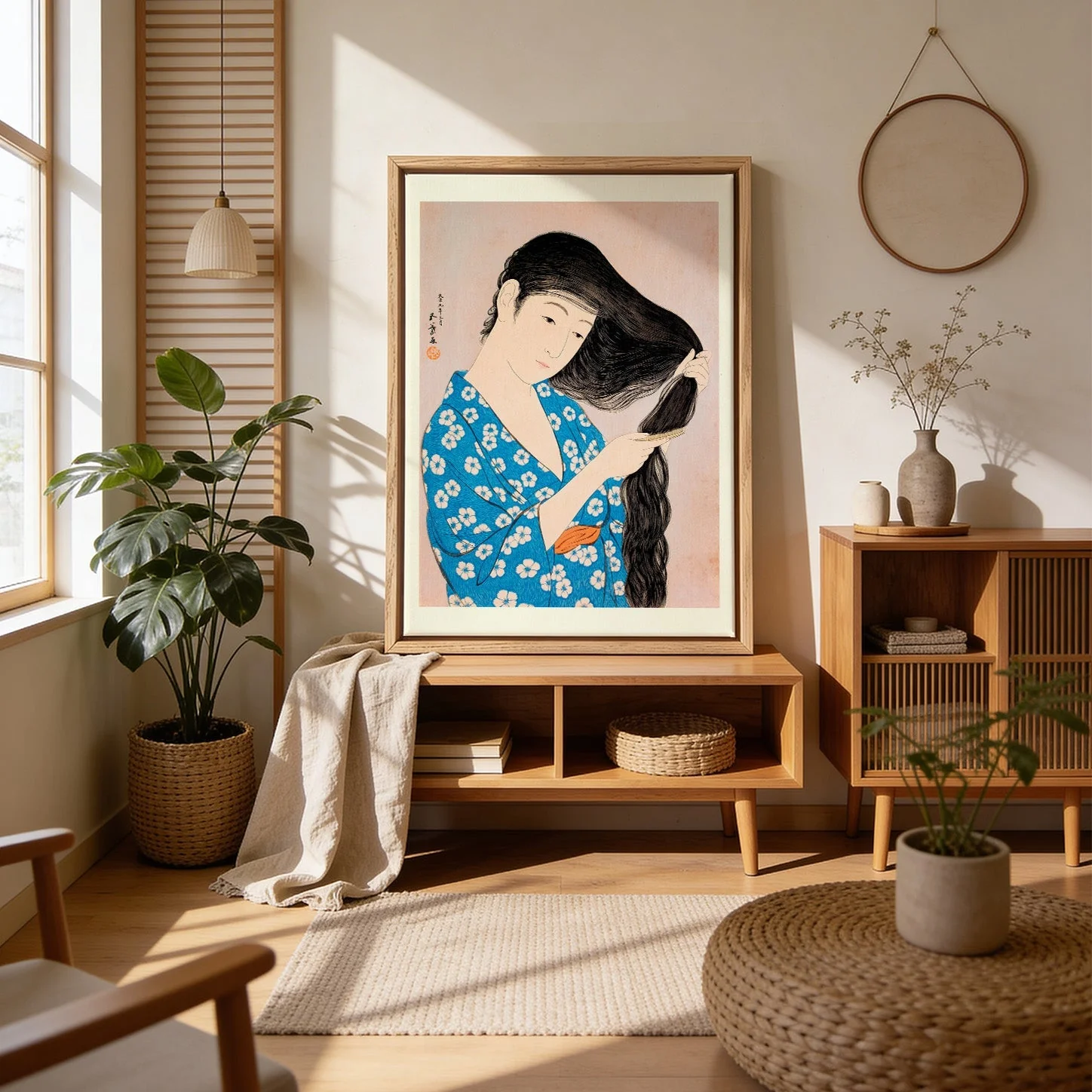
Woman Combing Her Hair by Gōyo Hashiguchi
Gōyo Hashiguchi's Woman Combing Her Hair is one of the finest examples of late Meiji-era bijinga — portraiture centred on feminine grace and quiet introspection. The composition draws the eye inward: the figure's downward gaze and the rhythmic fall of her hair create a meditative stillness. Hashiguchi's line work is precise yet tender, and his palette — muted indigos, warm ivories, and deep blacks — reflects both the ukiyo-e tradition and his own modernist sensibility. The negative space is purposeful, allowing the figure to breathe without isolation.
On canvas, the texture adds a subtle warmth that heightens every delicate brushstroke and ink line. The depth of the tonal contrasts becomes more present, giving this Japanese canvas print a quiet, gallery-worthy presence on the wall.
Product Information
Product Information
Shipping & Returns
Shipping & Returns
Description
Gōyo Hashiguchi's Woman Combing Her Hair is one of the finest examples of late Meiji-era bijinga — portraiture centred on feminine grace and quiet introspection. The composition draws the eye inward: the figure's downward gaze and the rhythmic fall of her hair create a meditative stillness. Hashiguchi's line work is precise yet tender, and his palette — muted indigos, warm ivories, and deep blacks — reflects both the ukiyo-e tradition and his own modernist sensibility. The negative space is purposeful, allowing the figure to breathe without isolation.
On canvas, the texture adds a subtle warmth that heightens every delicate brushstroke and ink line. The depth of the tonal contrasts becomes more present, giving this Japanese canvas print a quiet, gallery-worthy presence on the wall.