Nighthawks by Edward Hopper
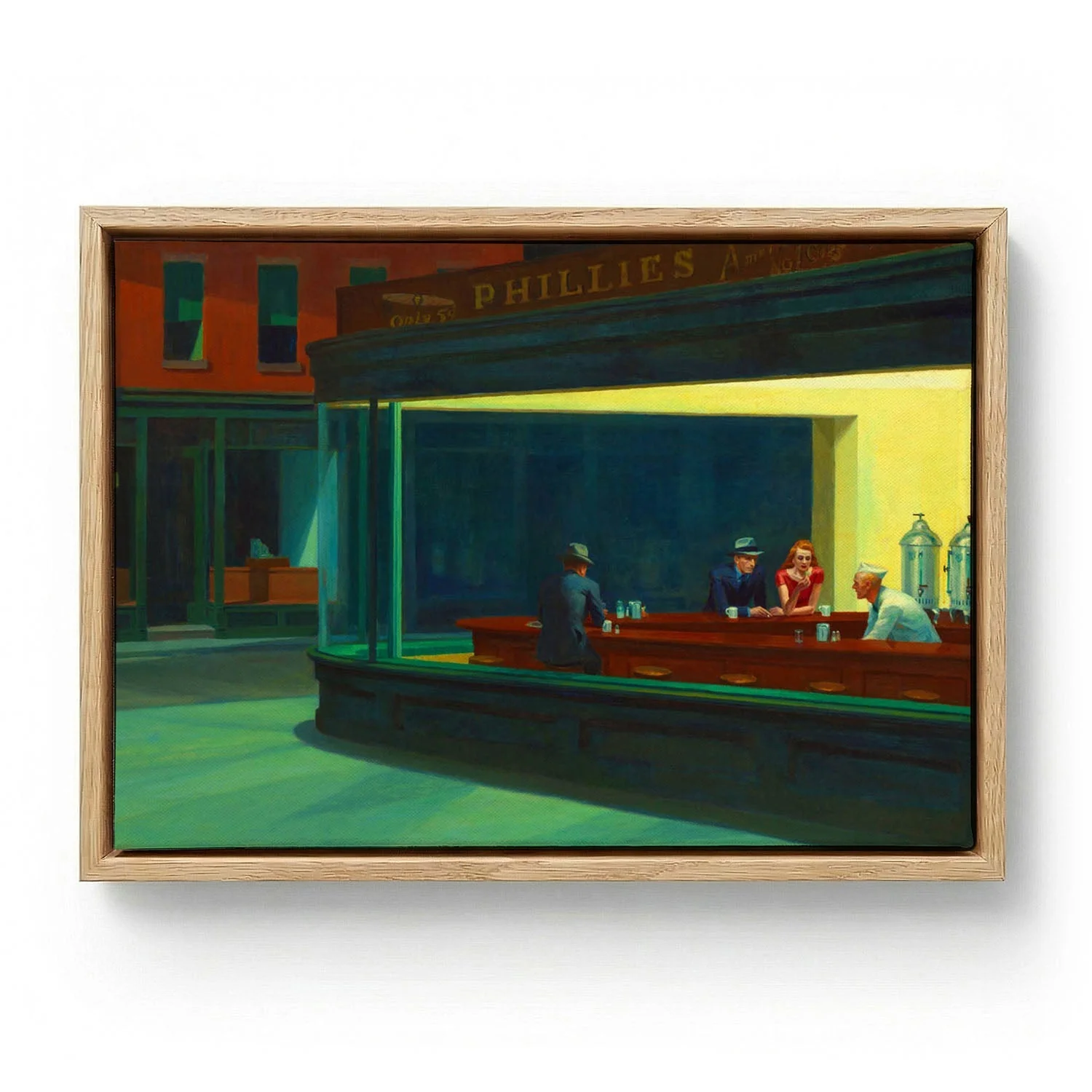
A late-night diner floats like an island of fluorescent light against an empty city street. Hopper's 1942 composition is a masterclass in urban solitude: four figures sealed inside a glass shell, each locked in private silence despite their proximity. The cool green-blue exterior and warm amber interior create a tension that defines American Realism at its most psychologically charged – direct, stripped of sentiment, and oddly timeless.
Canvas does Hopper justice. The weave softens the cool green-blue exterior and warms the amber interior of the diner, letting the psychological charge of the scene settle into a painted surface rather than a slick graphic one. As a canvas print, the isolated figures and fluorescent glow gain tactile depth — the urban solitude reads with the grounded, hand-made presence of the original painting.
More Images



Nighthawks by Edward Hopper
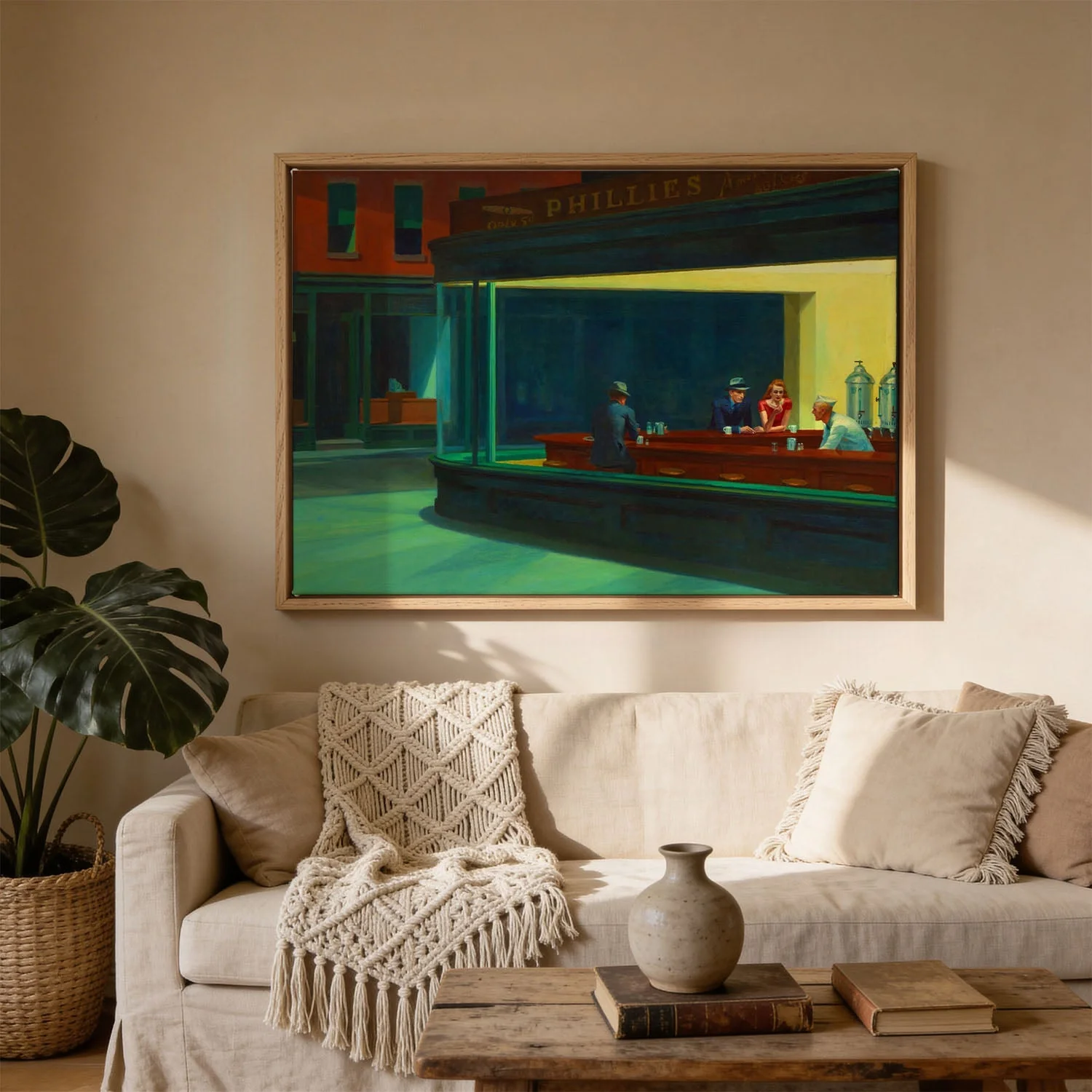
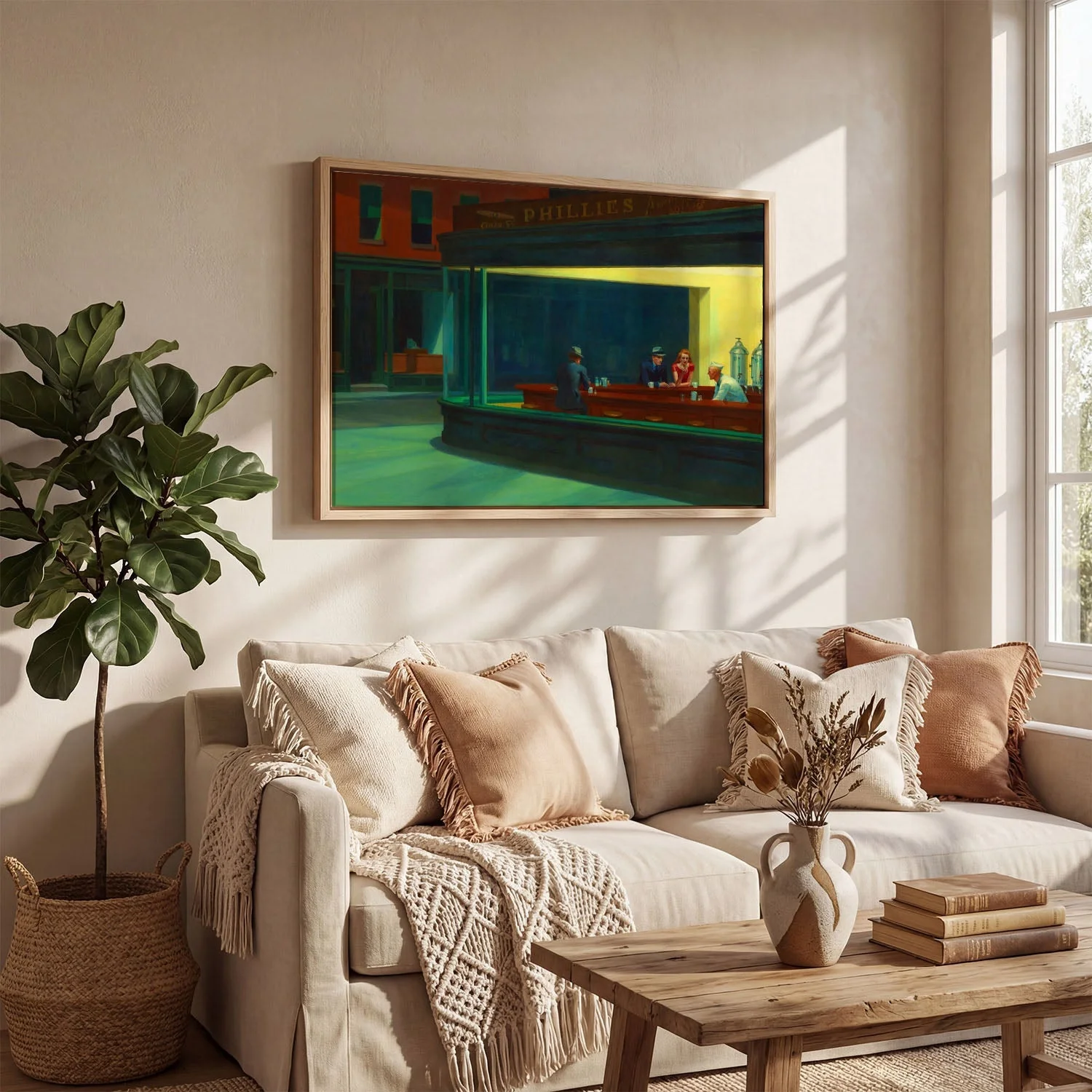
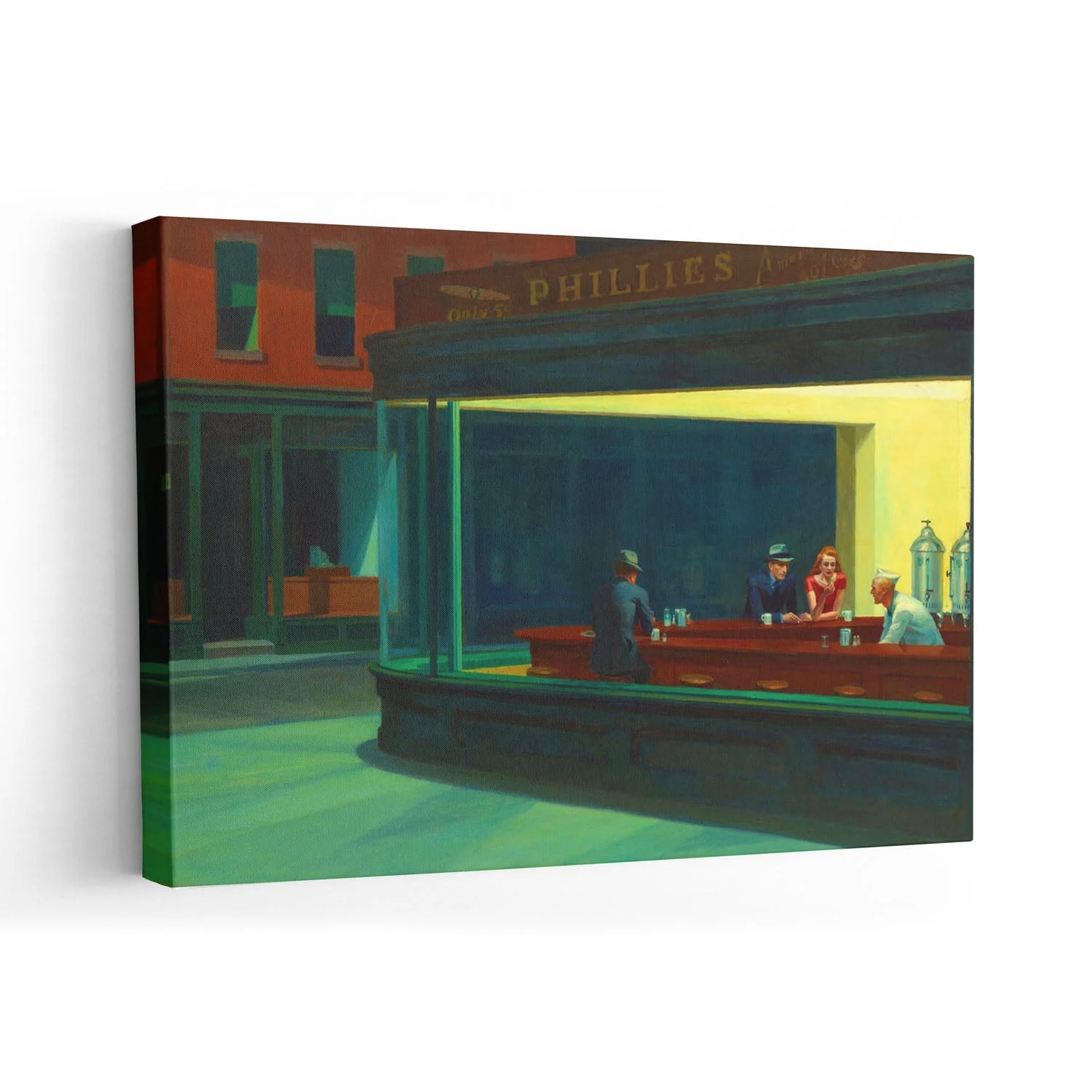
A late-night diner floats like an island of fluorescent light against an empty city street. Hopper's 1942 composition is a masterclass in urban solitude: four figures sealed inside a glass shell, each locked in private silence despite their proximity. The cool green-blue exterior and warm amber interior create a tension that defines American Realism at its most psychologically charged – direct, stripped of sentiment, and oddly timeless.
Canvas does Hopper justice. The weave softens the cool green-blue exterior and warms the amber interior of the diner, letting the psychological charge of the scene settle into a painted surface rather than a slick graphic one. As a canvas print, the isolated figures and fluorescent glow gain tactile depth — the urban solitude reads with the grounded, hand-made presence of the original painting.
Product Information
Product Information
Shipping & Returns
Shipping & Returns
Description
A late-night diner floats like an island of fluorescent light against an empty city street. Hopper's 1942 composition is a masterclass in urban solitude: four figures sealed inside a glass shell, each locked in private silence despite their proximity. The cool green-blue exterior and warm amber interior create a tension that defines American Realism at its most psychologically charged – direct, stripped of sentiment, and oddly timeless.
Canvas does Hopper justice. The weave softens the cool green-blue exterior and warms the amber interior of the diner, letting the psychological charge of the scene settle into a painted surface rather than a slick graphic one. As a canvas print, the isolated figures and fluorescent glow gain tactile depth — the urban solitude reads with the grounded, hand-made presence of the original painting.