Chez la Marchande de Pavots
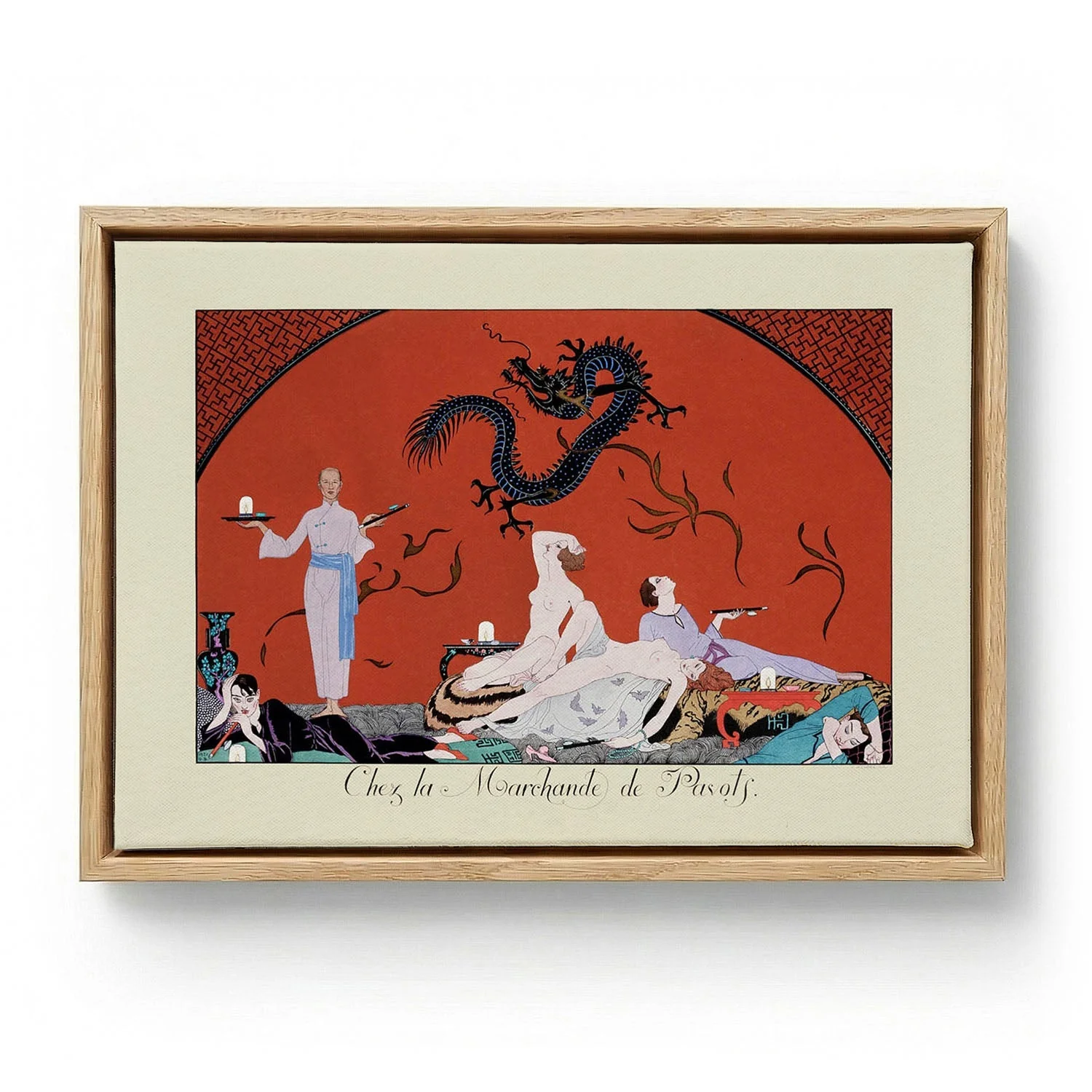
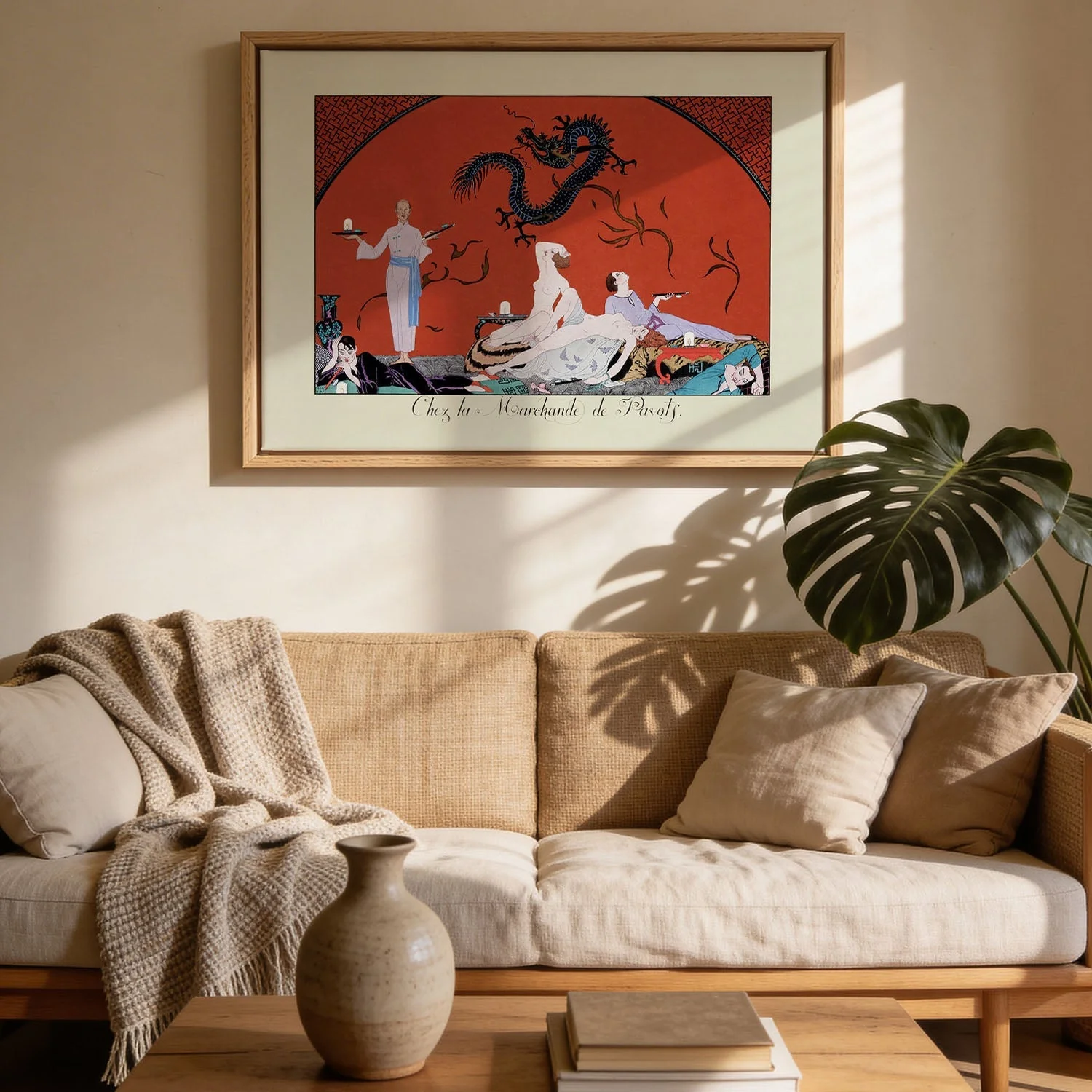
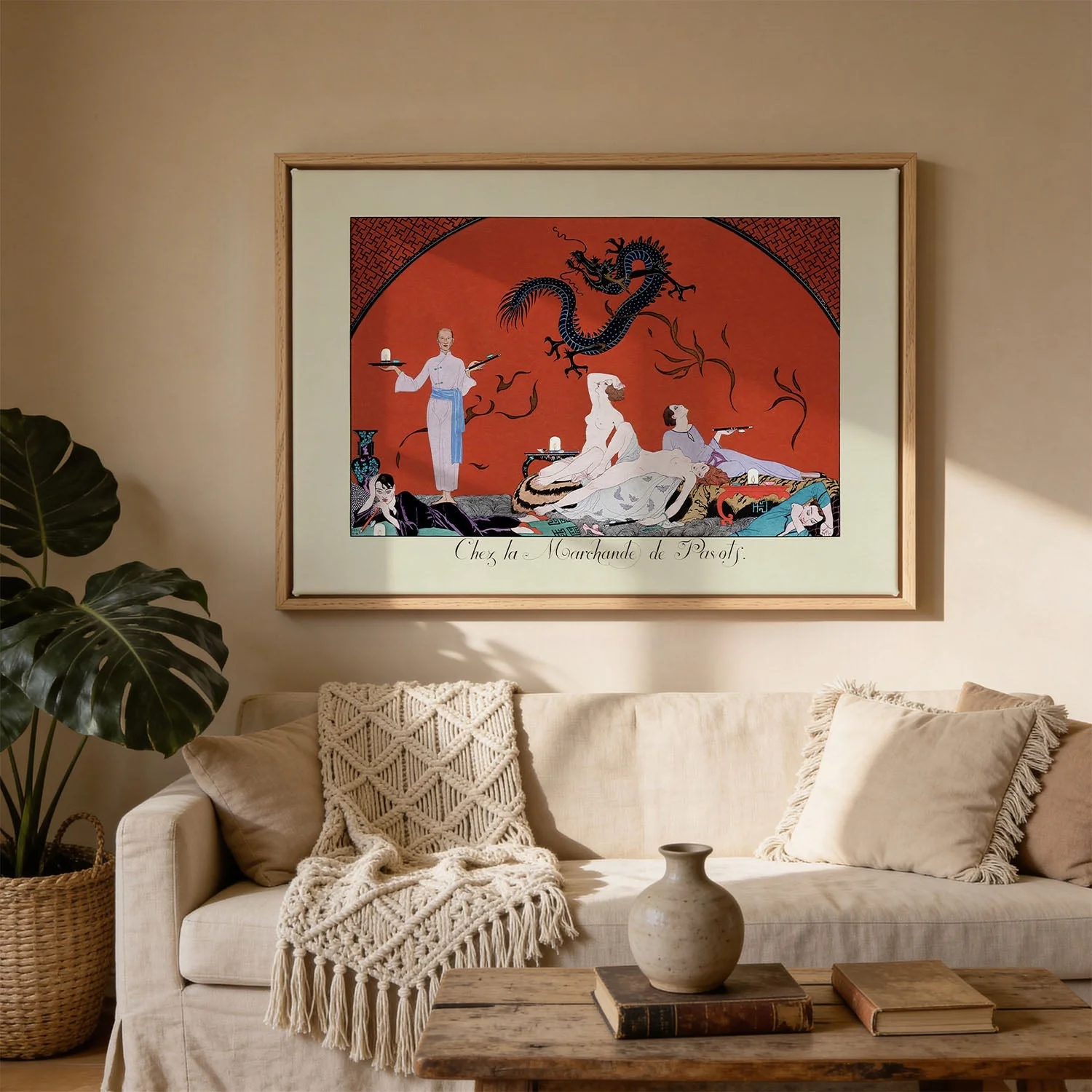
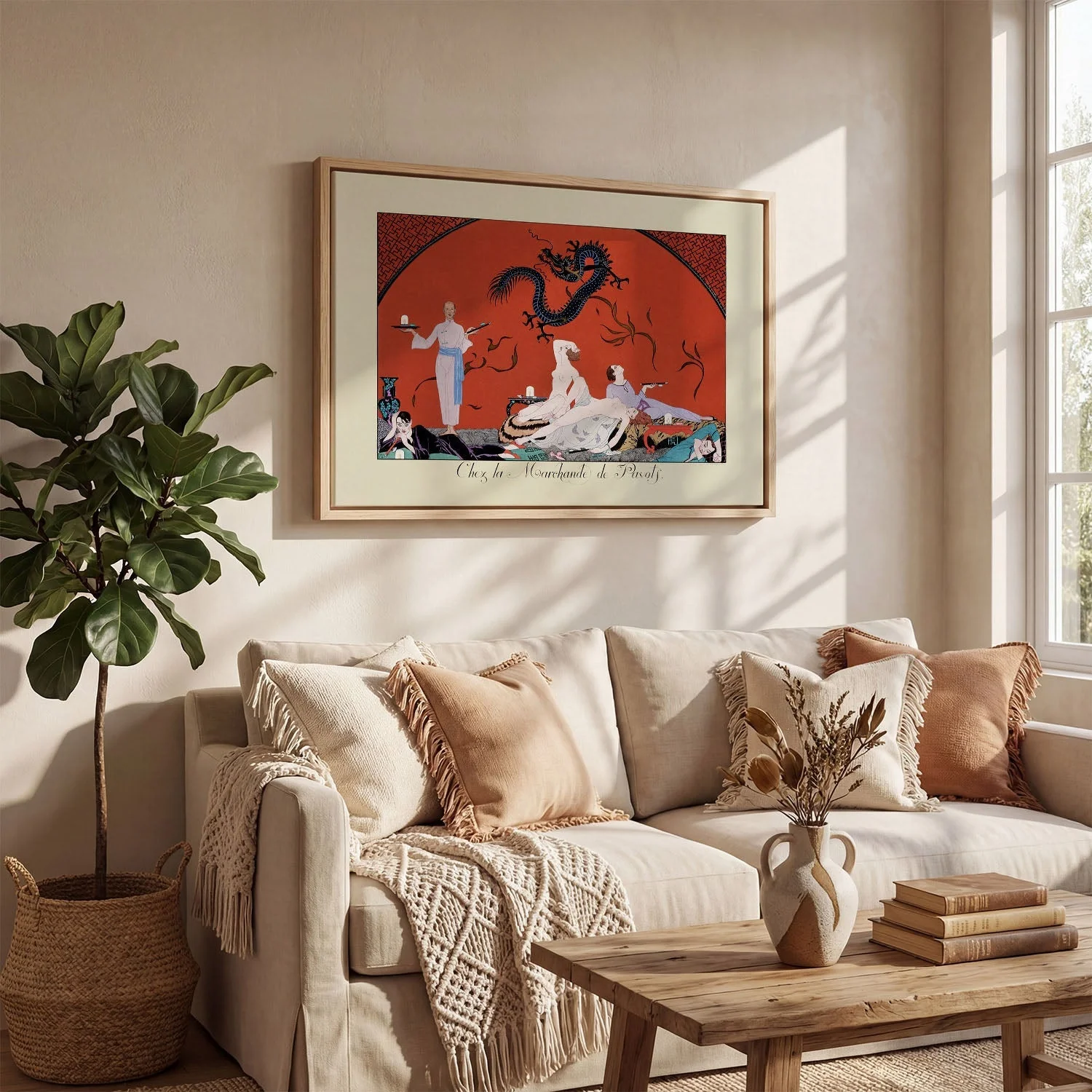
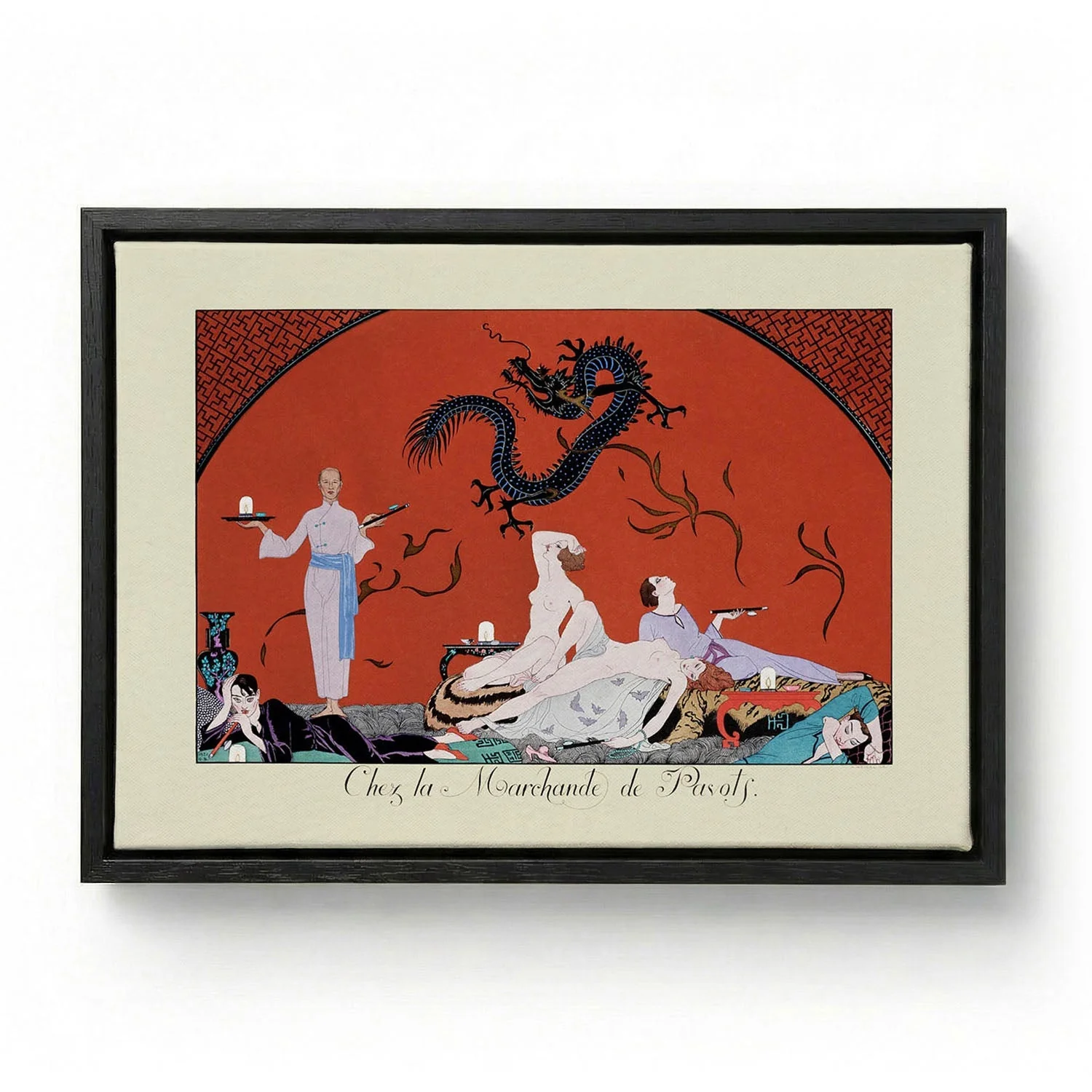
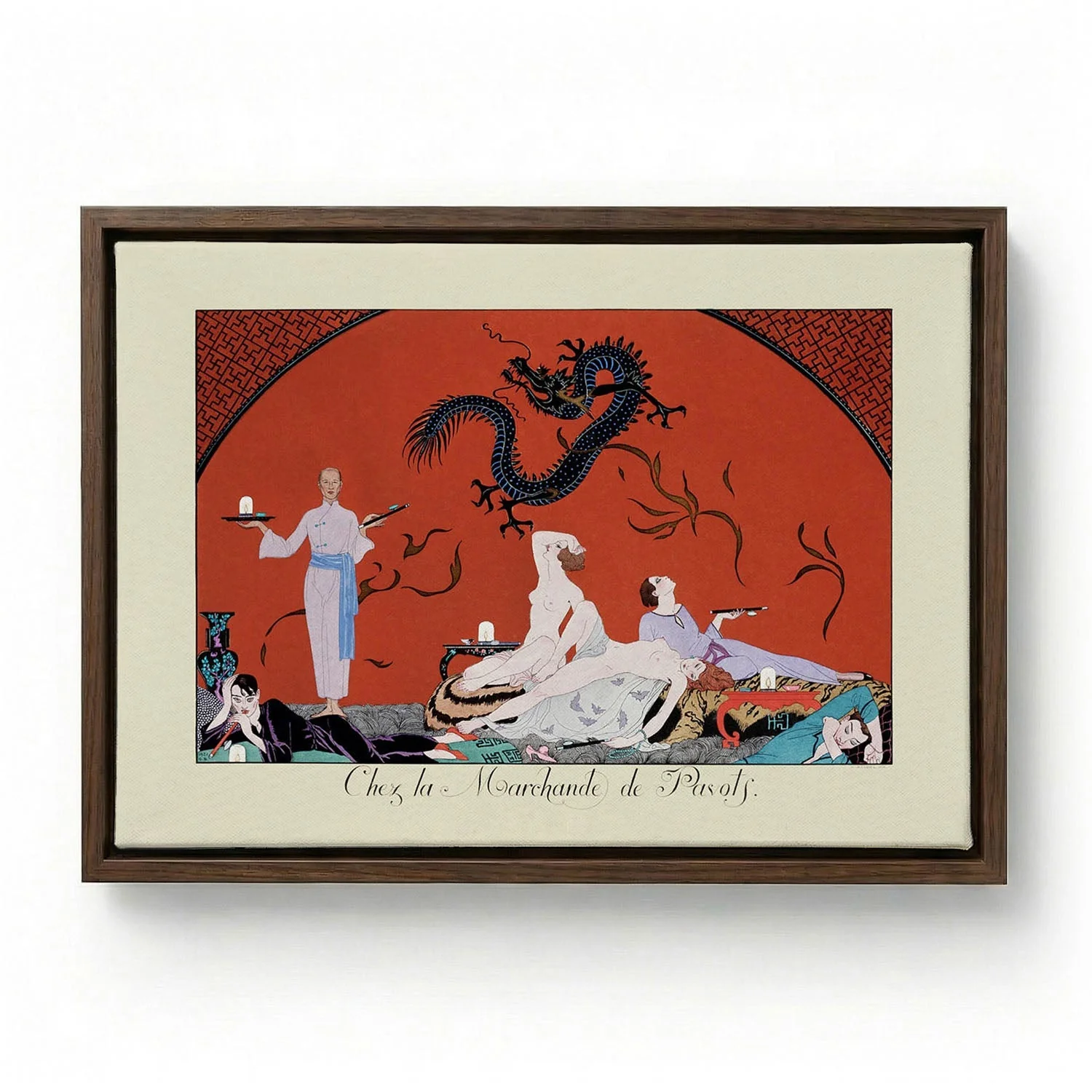
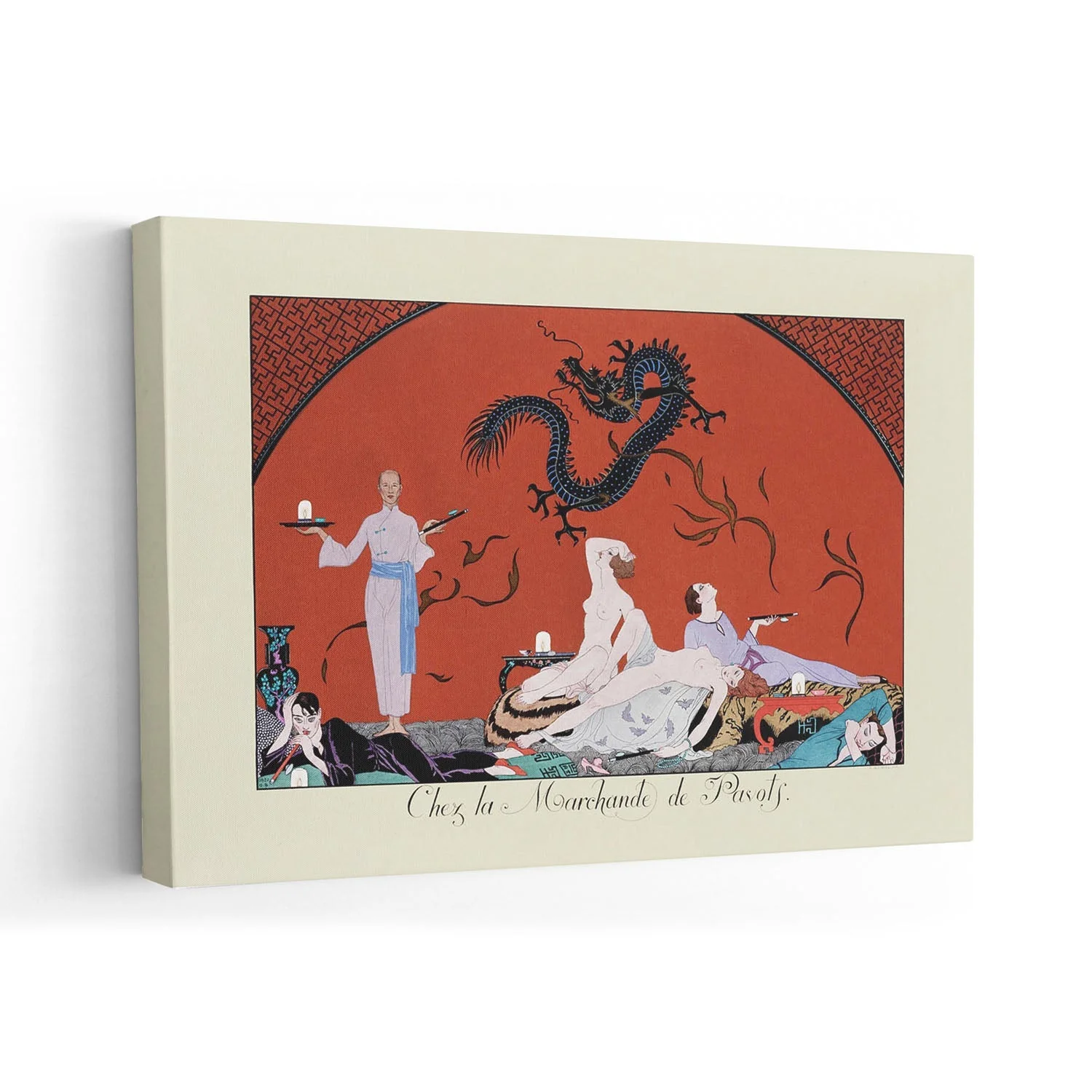
George Barbier conjured a world of languid luxury in this illustration — a flower seller's stall rendered in the opulent visual language of 1910s Paris. Figures move through the scene with theatrical grace, their clothing and postures performing a kind of slow choreography. Barbier's signature palette — rich ochres, deep greens, precise outlines — frames the composition with the confidence of someone who understood that decoration, when done with conviction, becomes art. The poppy seller herself is almost incidental; the real subject is the atmosphere of an era that wore beauty as a moral stance.
Barbier's 1910s palette — ochres, deep greens, theatrical line — gains genuine painterly warmth on cotton canvas. The weave softens the poster's crisp edges just enough to evoke the hand-coloured plates of the original pochoir prints. As a canvas print, the flower seller's stall feels less like reproduction and more like an object recovered from an era that wore beauty as a moral stance.
Original: $44.15
-65%$44.15
$15.45More Images
Chez la Marchande de Pavots
George Barbier conjured a world of languid luxury in this illustration — a flower seller's stall rendered in the opulent visual language of 1910s Paris. Figures move through the scene with theatrical grace, their clothing and postures performing a kind of slow choreography. Barbier's signature palette — rich ochres, deep greens, precise outlines — frames the composition with the confidence of someone who understood that decoration, when done with conviction, becomes art. The poppy seller herself is almost incidental; the real subject is the atmosphere of an era that wore beauty as a moral stance.
Barbier's 1910s palette — ochres, deep greens, theatrical line — gains genuine painterly warmth on cotton canvas. The weave softens the poster's crisp edges just enough to evoke the hand-coloured plates of the original pochoir prints. As a canvas print, the flower seller's stall feels less like reproduction and more like an object recovered from an era that wore beauty as a moral stance.
Product Information
Product Information
Shipping & Returns
Shipping & Returns
Description
George Barbier conjured a world of languid luxury in this illustration — a flower seller's stall rendered in the opulent visual language of 1910s Paris. Figures move through the scene with theatrical grace, their clothing and postures performing a kind of slow choreography. Barbier's signature palette — rich ochres, deep greens, precise outlines — frames the composition with the confidence of someone who understood that decoration, when done with conviction, becomes art. The poppy seller herself is almost incidental; the real subject is the atmosphere of an era that wore beauty as a moral stance.
Barbier's 1910s palette — ochres, deep greens, theatrical line — gains genuine painterly warmth on cotton canvas. The weave softens the poster's crisp edges just enough to evoke the hand-coloured plates of the original pochoir prints. As a canvas print, the flower seller's stall feels less like reproduction and more like an object recovered from an era that wore beauty as a moral stance.