Bauhaus Weimar Exhibition by Rudolf Baschant
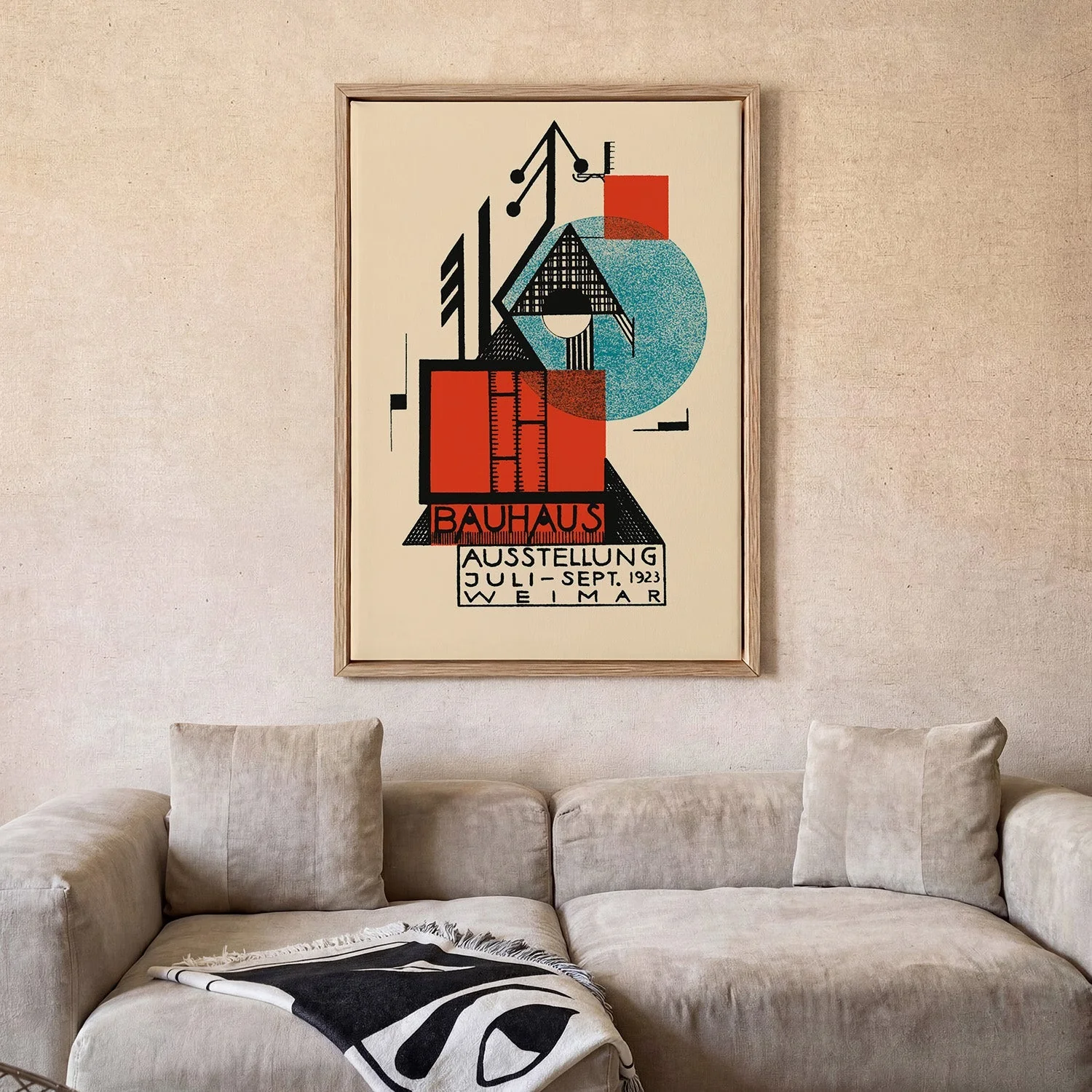
Rudolf Baschant's 1923 poster for the first public Bauhaus exhibition in Weimar is one of the most striking graphic works to emerge from the school — a stylised human figure set against bold geometric forms and flat colour fields, reflecting both his training under Klee and Kandinsky and the school's ambition to unite fine art with applied design. The composition holds a rare balance: disciplined modernist structure animated by a sense of lyrical movement, produced by a student whose graphic instincts were already fully formed.
Printed as a canvas art print with archival Japanese pigment inks on cotton canvas, this historic Bauhaus graphic gains warmth and visual weight from the woven surface, the bold colour contrasts rendered with a depth and richness that honours the original's graphic ambition.
Original: $38.34
-65%$38.34
$13.42More Images
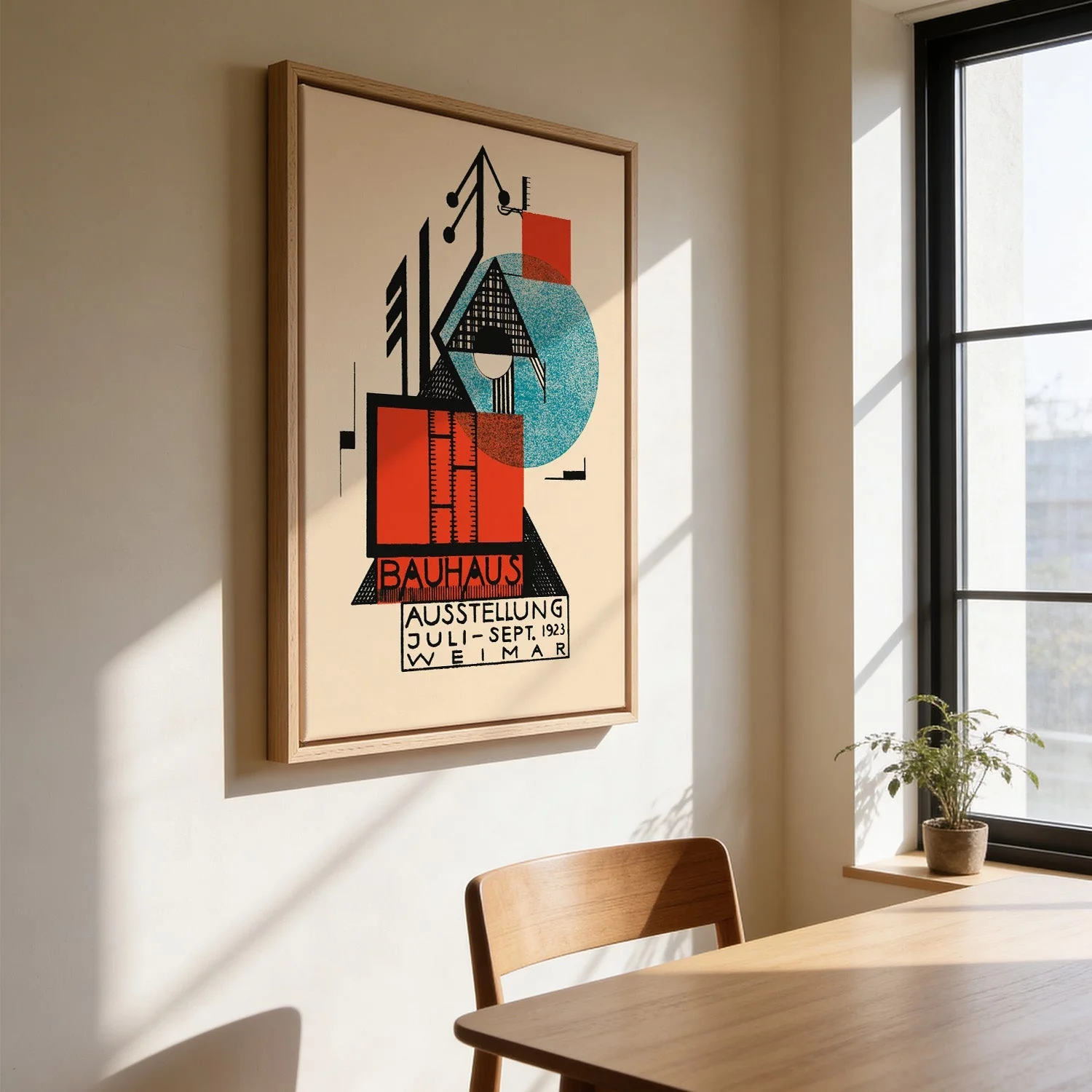


Bauhaus Weimar Exhibition by Rudolf Baschant
Rudolf Baschant's 1923 poster for the first public Bauhaus exhibition in Weimar is one of the most striking graphic works to emerge from the school — a stylised human figure set against bold geometric forms and flat colour fields, reflecting both his training under Klee and Kandinsky and the school's ambition to unite fine art with applied design. The composition holds a rare balance: disciplined modernist structure animated by a sense of lyrical movement, produced by a student whose graphic instincts were already fully formed.
Printed as a canvas art print with archival Japanese pigment inks on cotton canvas, this historic Bauhaus graphic gains warmth and visual weight from the woven surface, the bold colour contrasts rendered with a depth and richness that honours the original's graphic ambition.
Product Information
Product Information
Shipping & Returns
Shipping & Returns
Description
Rudolf Baschant's 1923 poster for the first public Bauhaus exhibition in Weimar is one of the most striking graphic works to emerge from the school — a stylised human figure set against bold geometric forms and flat colour fields, reflecting both his training under Klee and Kandinsky and the school's ambition to unite fine art with applied design. The composition holds a rare balance: disciplined modernist structure animated by a sense of lyrical movement, produced by a student whose graphic instincts were already fully formed.
Printed as a canvas art print with archival Japanese pigment inks on cotton canvas, this historic Bauhaus graphic gains warmth and visual weight from the woven surface, the bold colour contrasts rendered with a depth and richness that honours the original's graphic ambition.