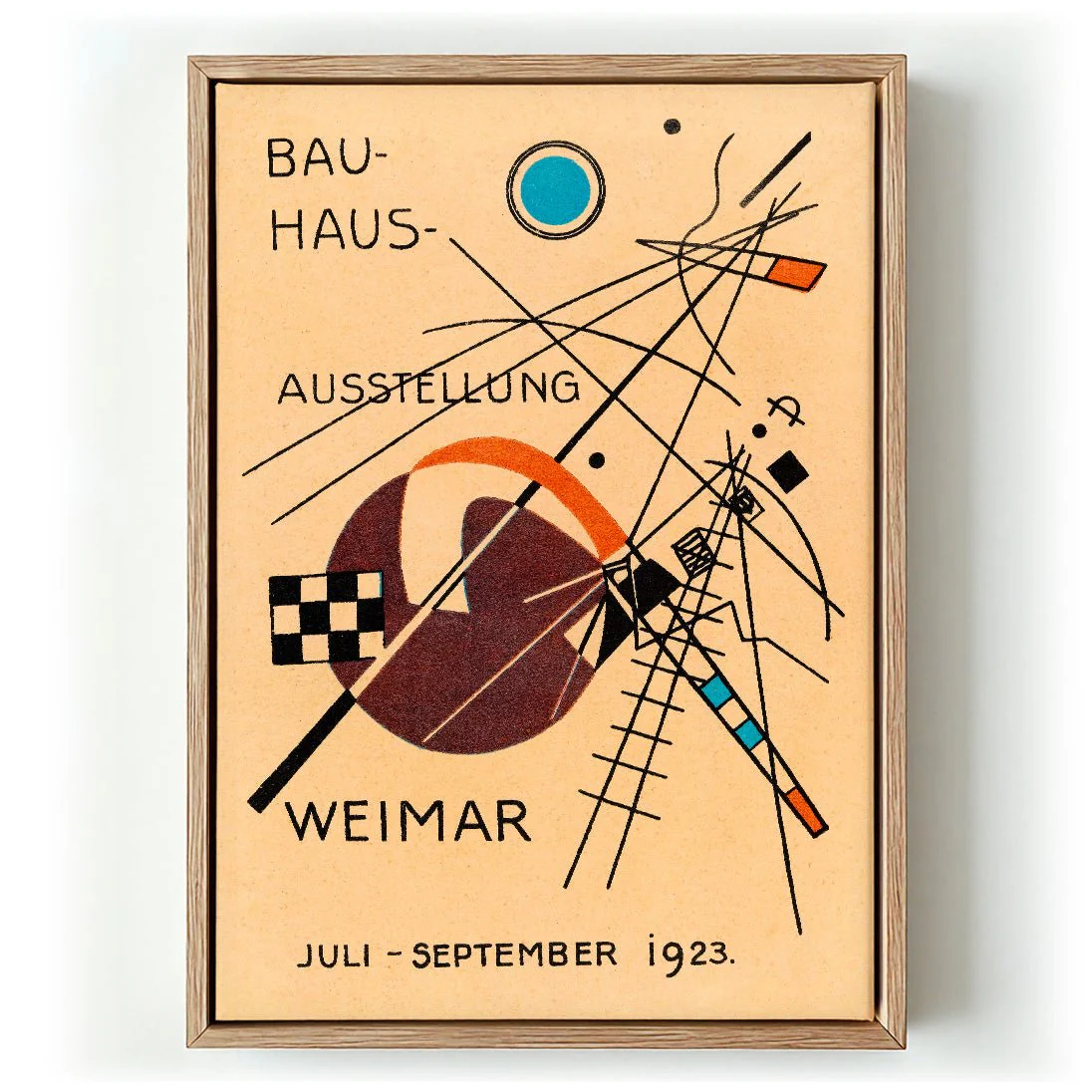
Bauhaus Ausstellung 1923 Weimar by Wassily Kandinsky
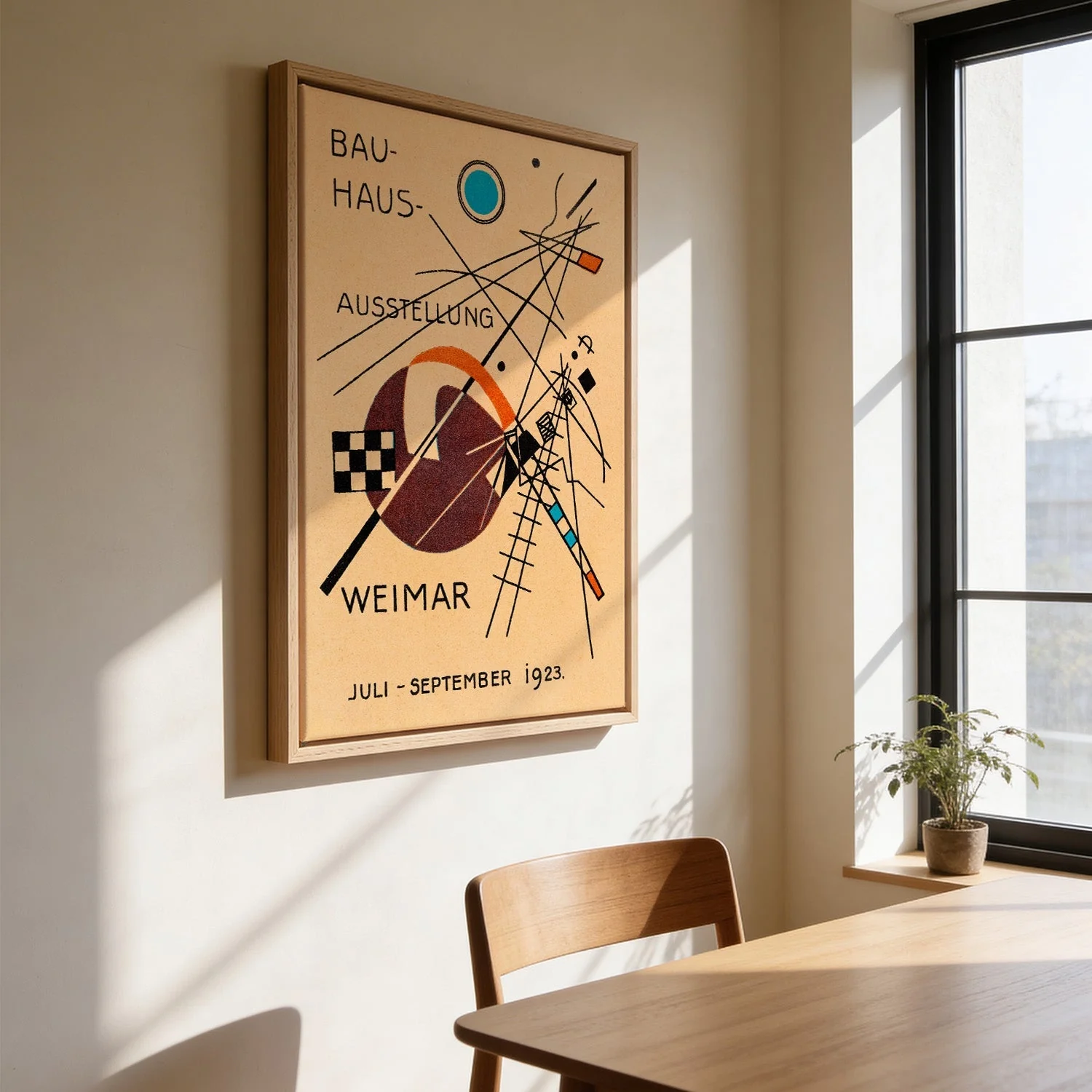
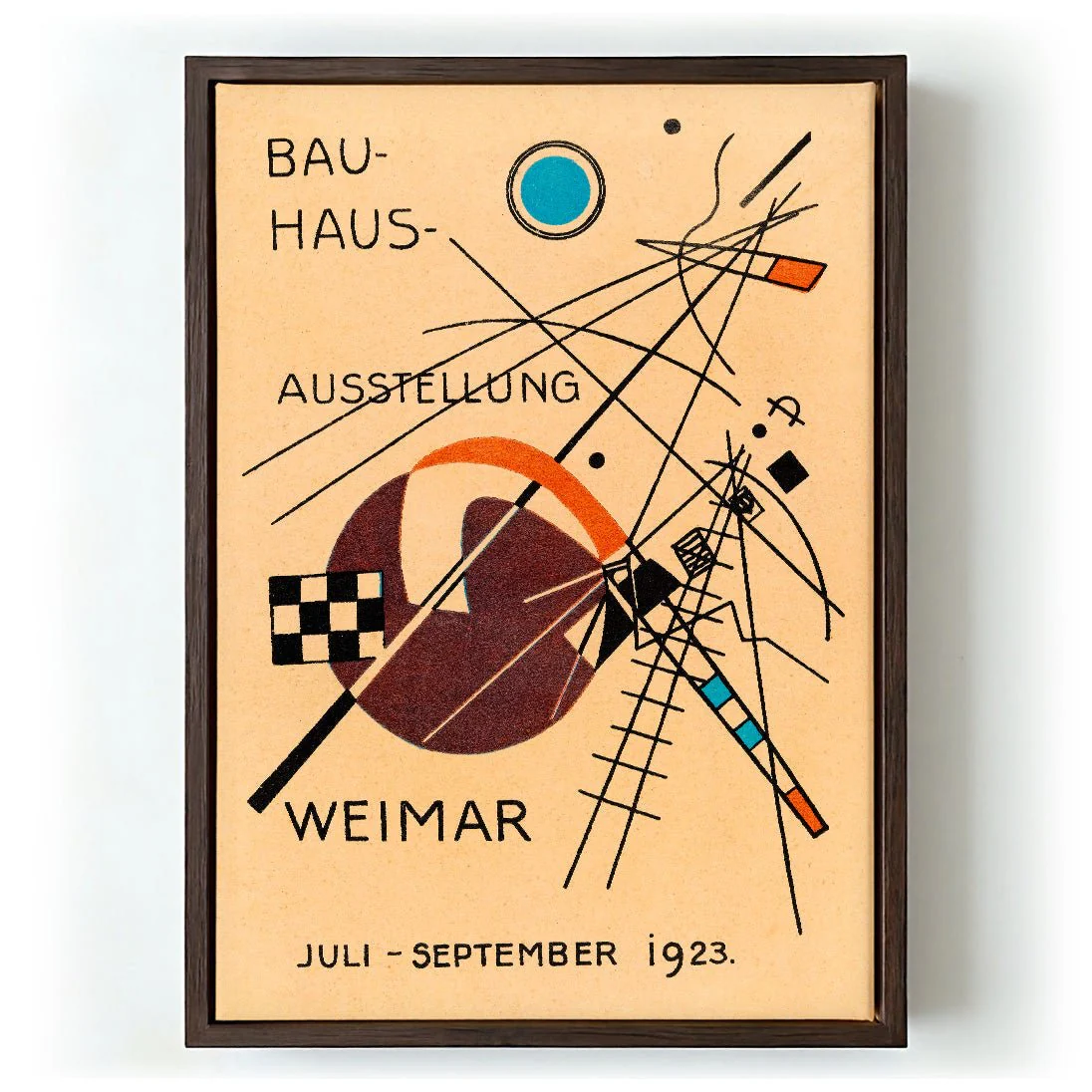
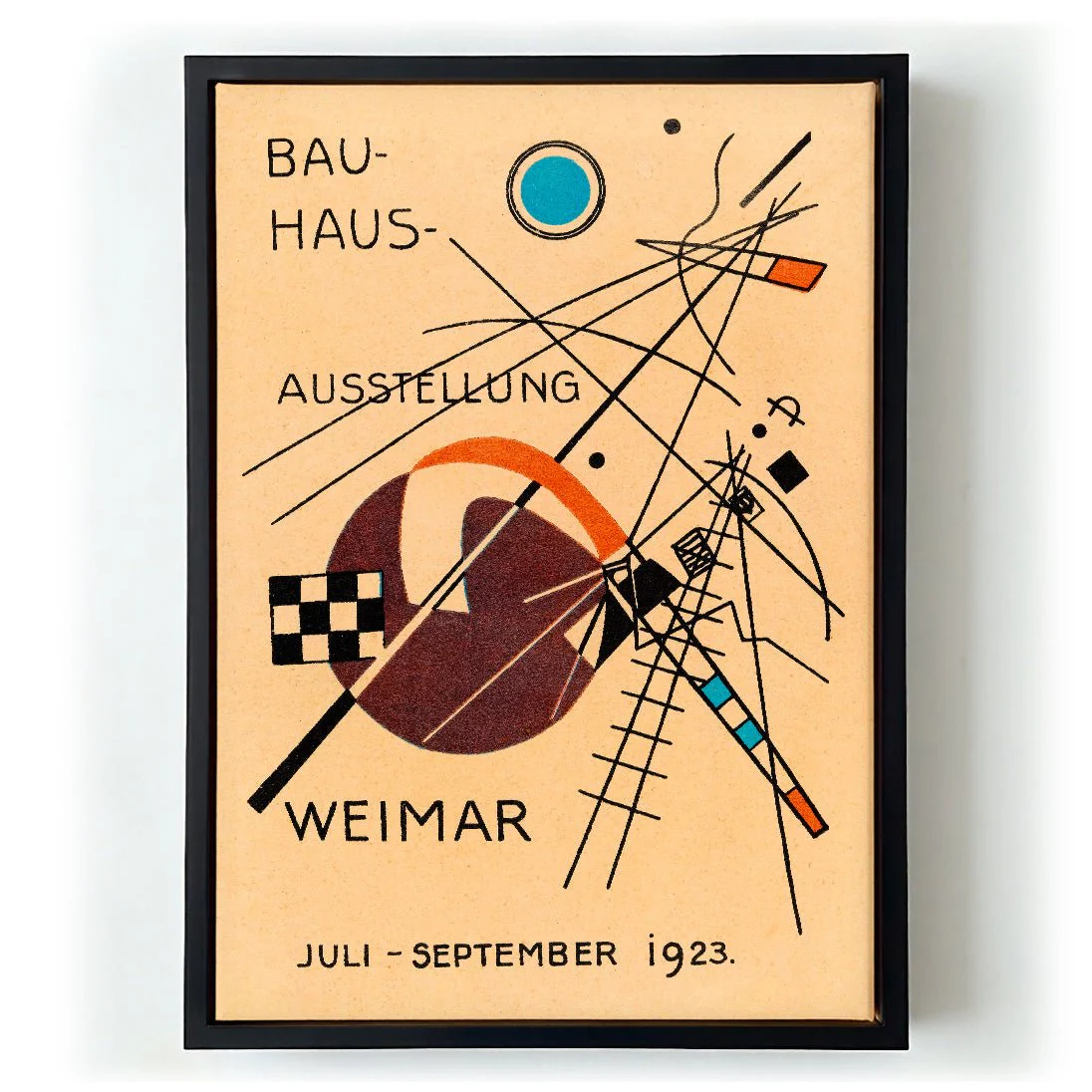
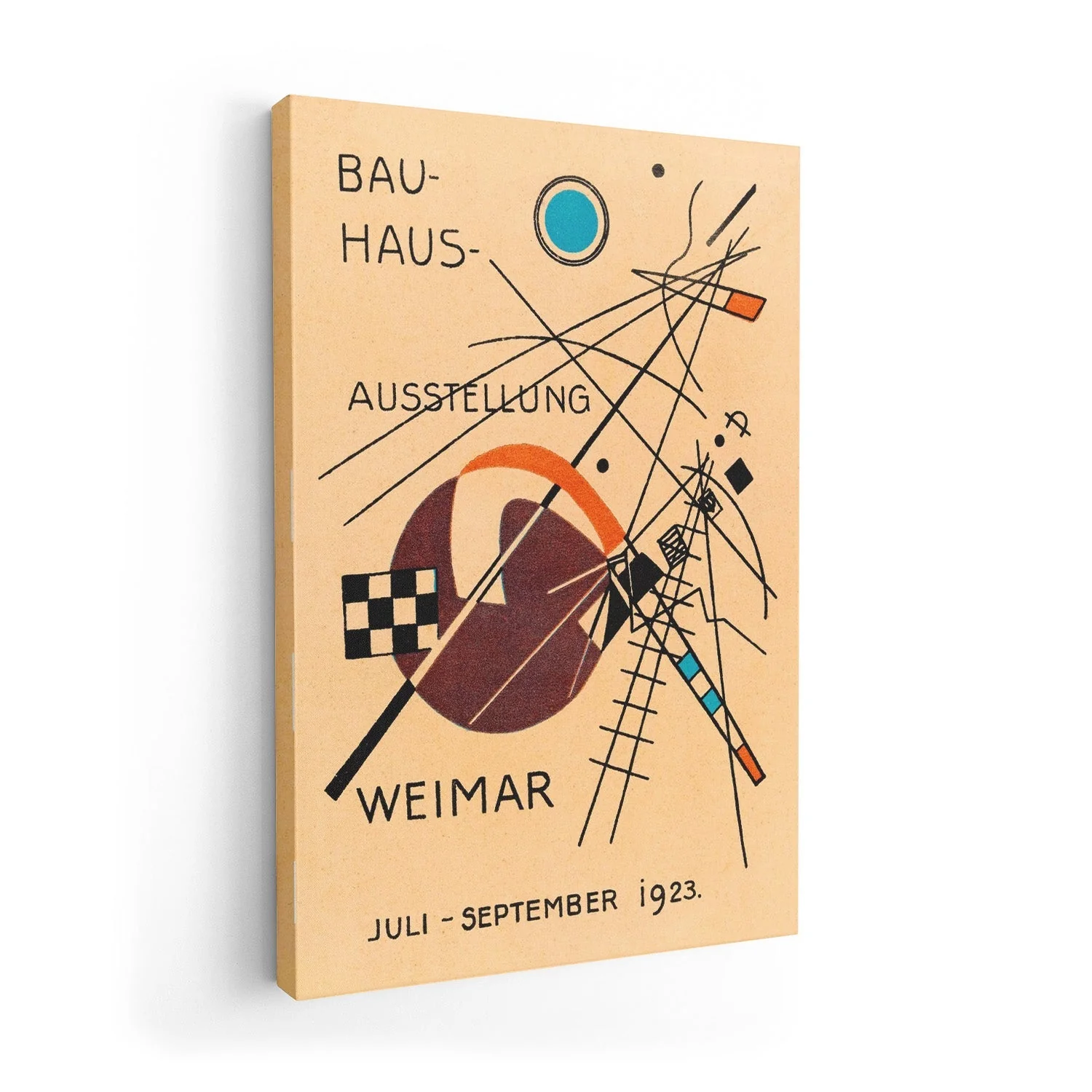
Designed by Wassily Kandinsky for the first major Bauhaus exhibition in 1923, this graphic work is a concentrated statement of Bauhaus principles — circle, triangle, and square arranged in dynamic tension, primary colours assigned to elemental forms in a composition that functions as both poster and manifesto. The design operates at the intersection of abstract painting and graphic communication, translating Kandinsky's colour theory into a visual language legible from across a room. It remains one of the defining documents of the early modernist movement in European design.
Printed as a canvas art print with archival Japanese pigment inks on cotton canvas, the bold primary palette and crisp geometric forms of this Bauhaus classic are rendered with depth and warmth, the canvas texture adding a subtle physicality to Kandinsky's graphic precision.
Original: $38.34
-65%$38.34
$13.42More Images
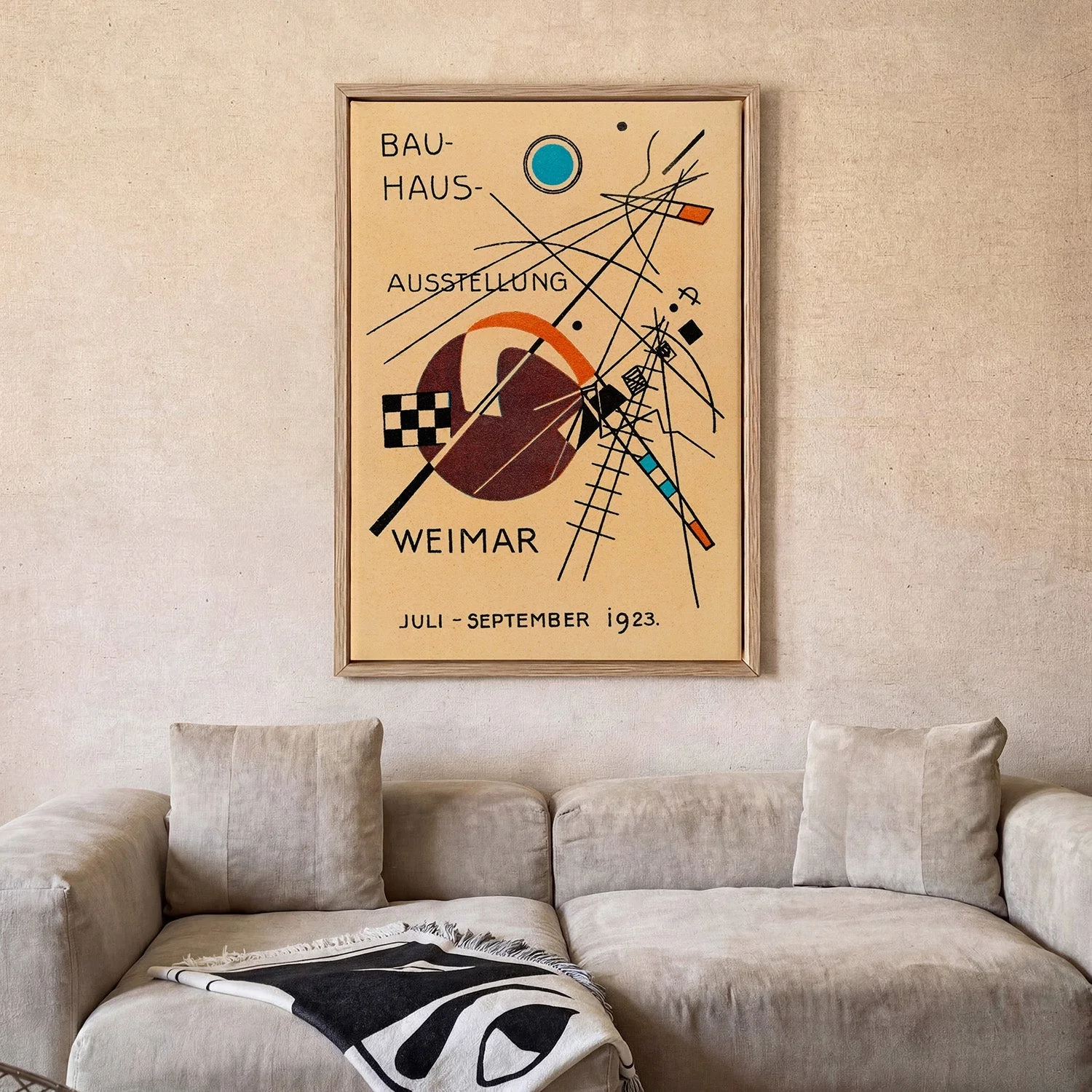

Bauhaus Ausstellung 1923 Weimar by Wassily Kandinsky
Designed by Wassily Kandinsky for the first major Bauhaus exhibition in 1923, this graphic work is a concentrated statement of Bauhaus principles — circle, triangle, and square arranged in dynamic tension, primary colours assigned to elemental forms in a composition that functions as both poster and manifesto. The design operates at the intersection of abstract painting and graphic communication, translating Kandinsky's colour theory into a visual language legible from across a room. It remains one of the defining documents of the early modernist movement in European design.
Printed as a canvas art print with archival Japanese pigment inks on cotton canvas, the bold primary palette and crisp geometric forms of this Bauhaus classic are rendered with depth and warmth, the canvas texture adding a subtle physicality to Kandinsky's graphic precision.
Product Information
Product Information
Shipping & Returns
Shipping & Returns
Description
Designed by Wassily Kandinsky for the first major Bauhaus exhibition in 1923, this graphic work is a concentrated statement of Bauhaus principles — circle, triangle, and square arranged in dynamic tension, primary colours assigned to elemental forms in a composition that functions as both poster and manifesto. The design operates at the intersection of abstract painting and graphic communication, translating Kandinsky's colour theory into a visual language legible from across a room. It remains one of the defining documents of the early modernist movement in European design.
Printed as a canvas art print with archival Japanese pigment inks on cotton canvas, the bold primary palette and crisp geometric forms of this Bauhaus classic are rendered with depth and warmth, the canvas texture adding a subtle physicality to Kandinsky's graphic precision.