Au Revoir
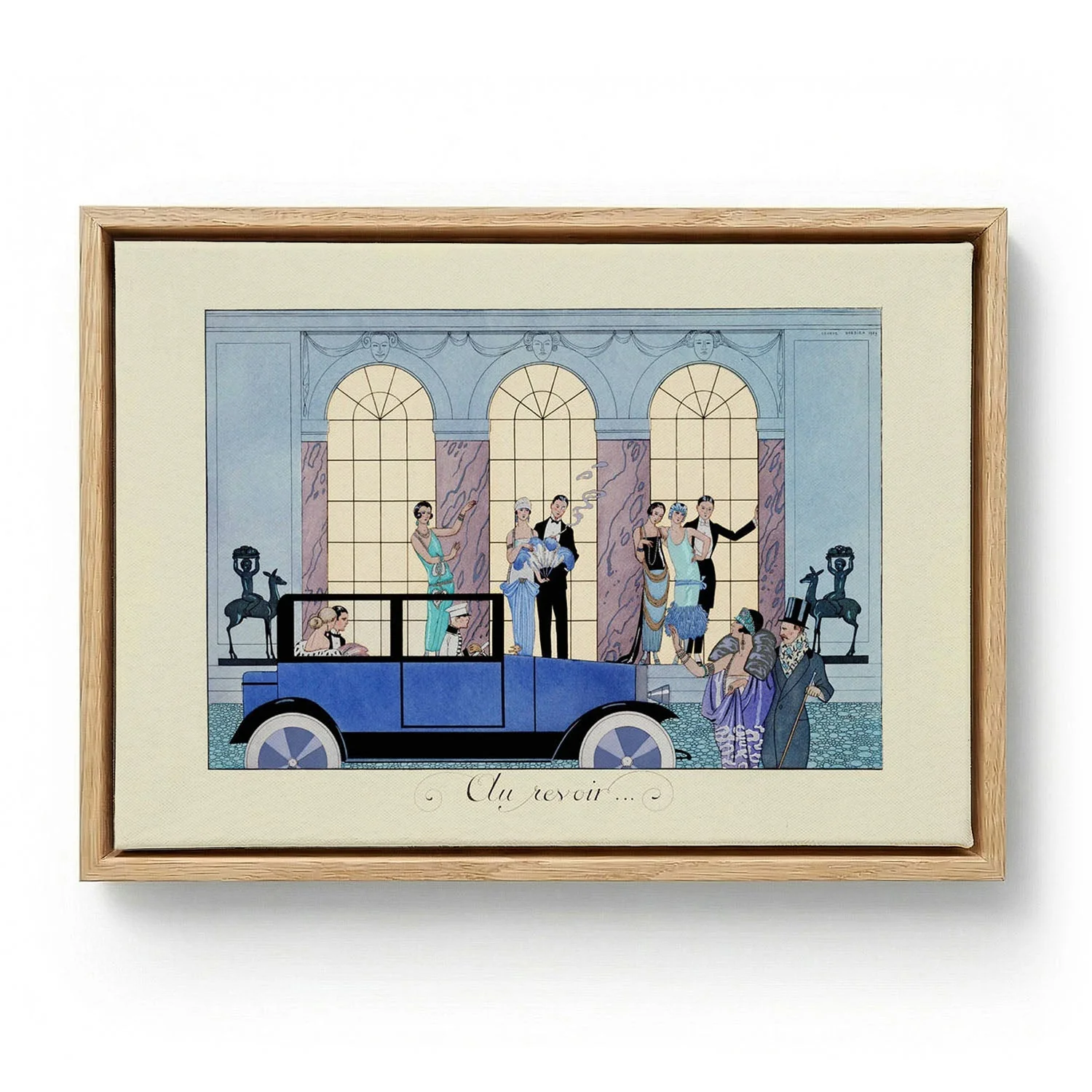
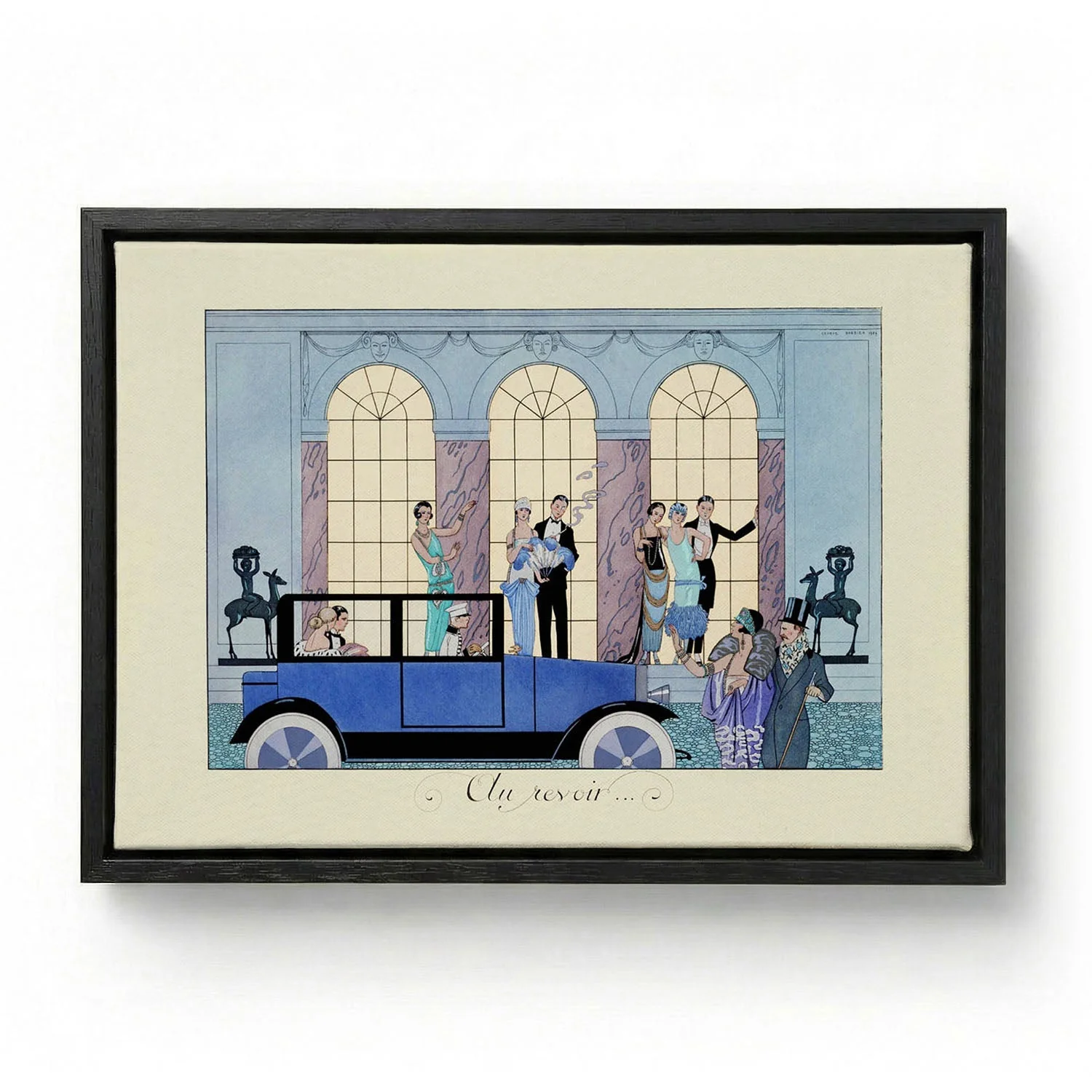
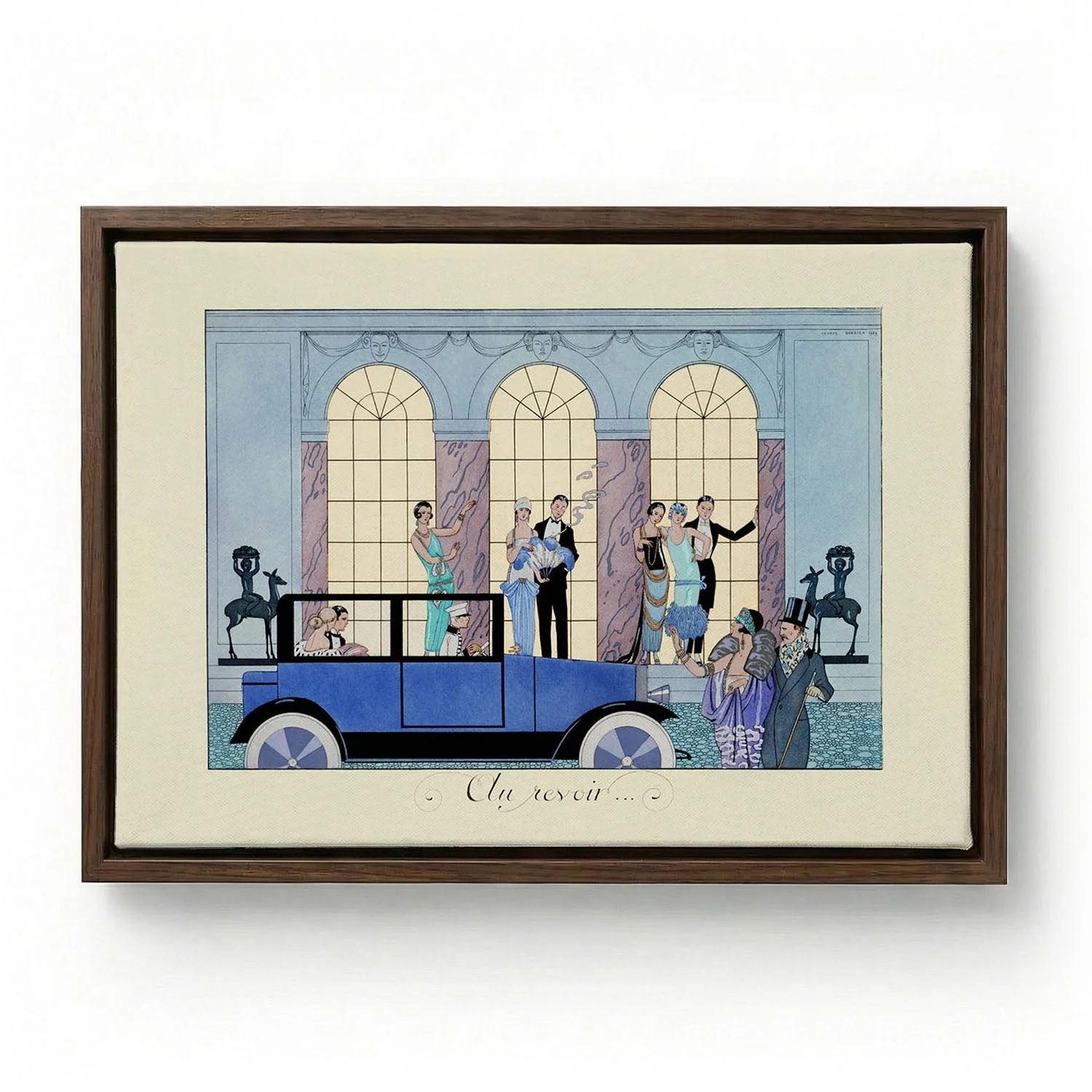
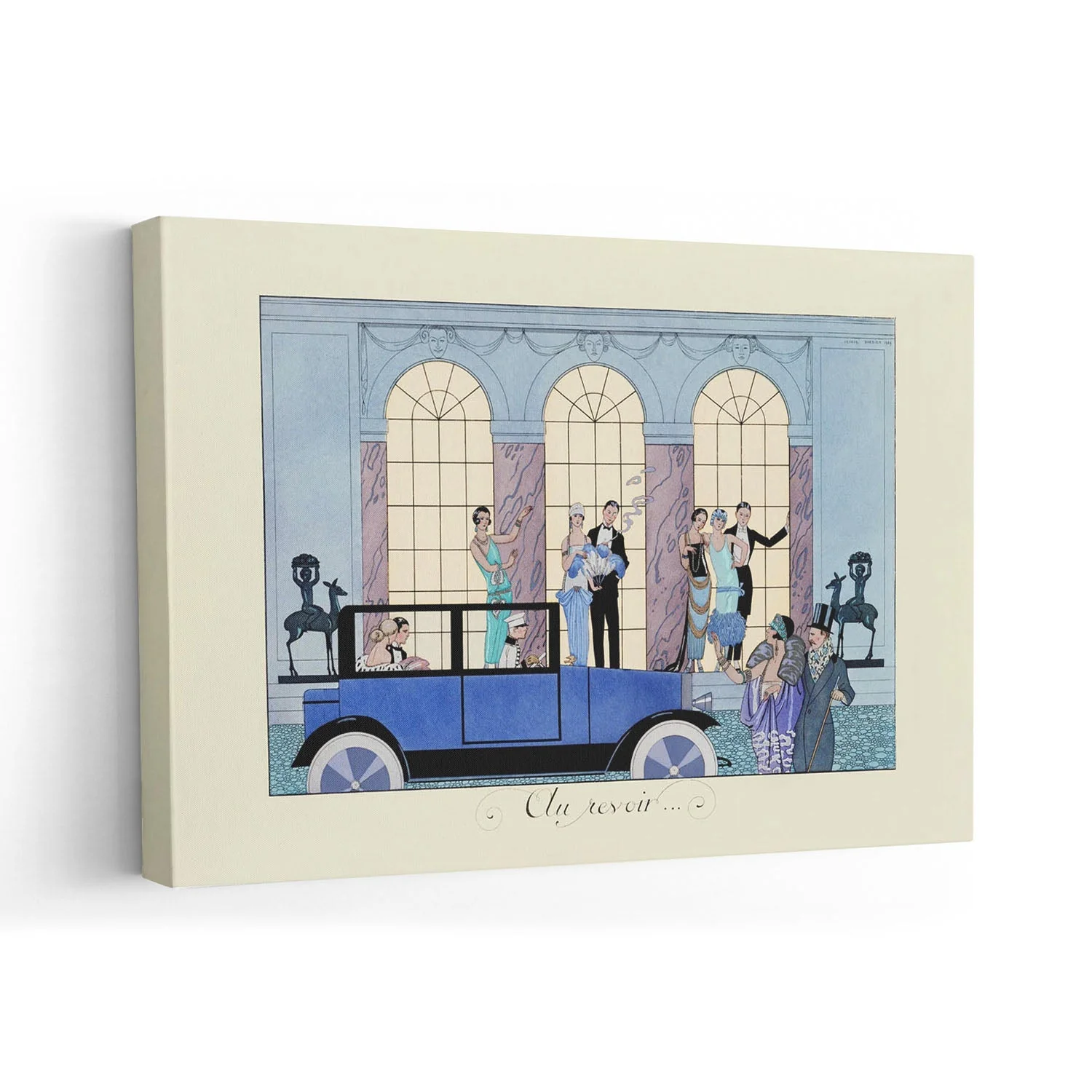
Au Revoir captures George Barbier at his most characteristic: a moment of departure staged with the theatrical elegance that defined French Art Deco illustration in the 1910s and 1920s. Two figures are caught between closeness and distance, their postures and costumes rendered with the fluid, unhurried line that was Barbier's signature. The composition is horizontal, landscape-format, giving the scene a cinematic width — figures and setting arranged like a stage set in which gesture carries all the narrative weight. The colour palette is restrained and purposeful, drawing on the japoniste influence that ran through French decorative illustration throughout this period.
Canvas suits the theatricality of Barbier's Art Deco scene. The weave lends the restrained japoniste palette a dusty, period-correct warmth, softening the fluid line just enough to feel hand-drawn rather than reproduced. As a canvas print, the cinematic horizontal composition gains the tactile depth of a painted stage flat — gestural, elegant, and quietly dramatic in a way that smoother surfaces cannot match.
Original: $44.15
-65%$44.15
$15.45More Images
Au Revoir
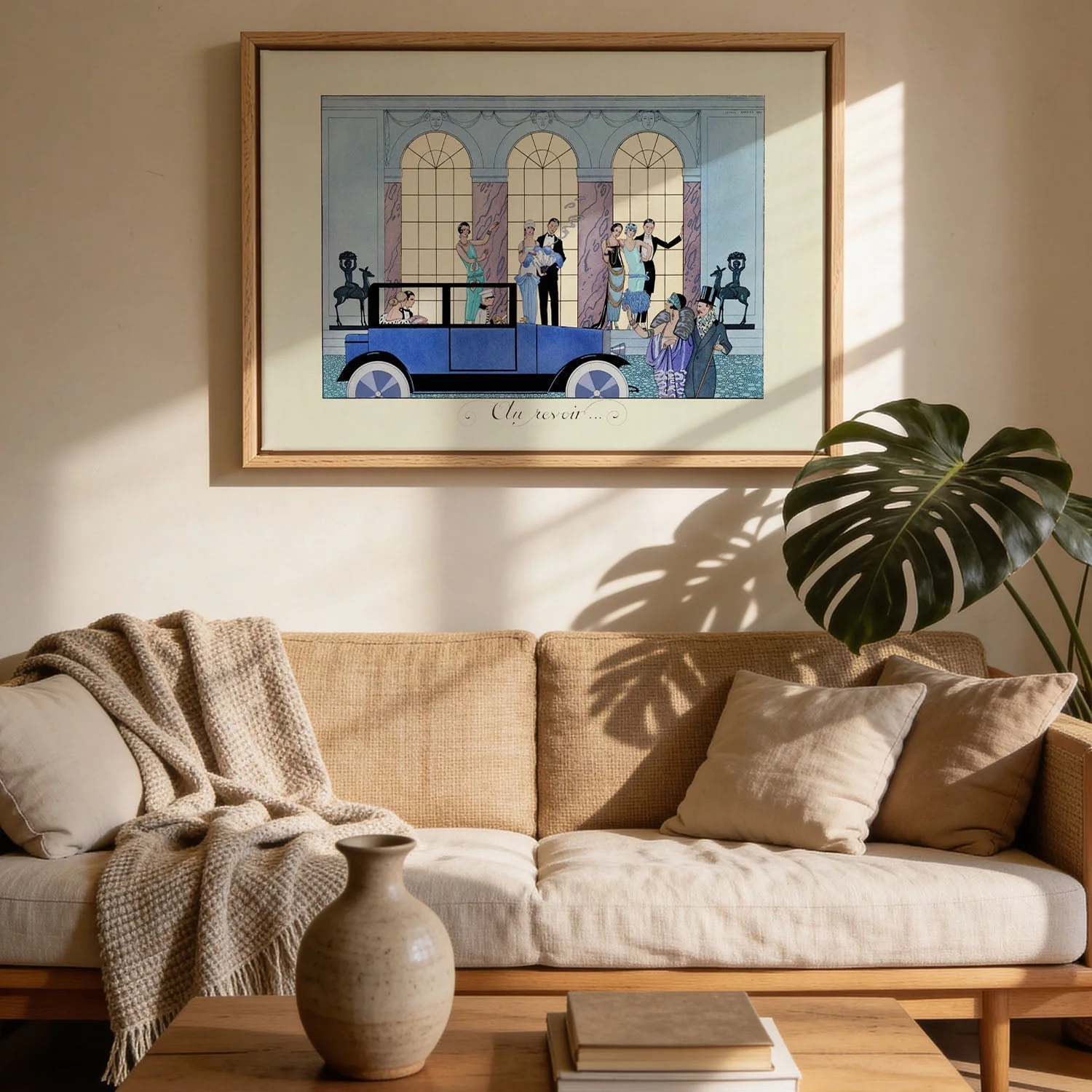
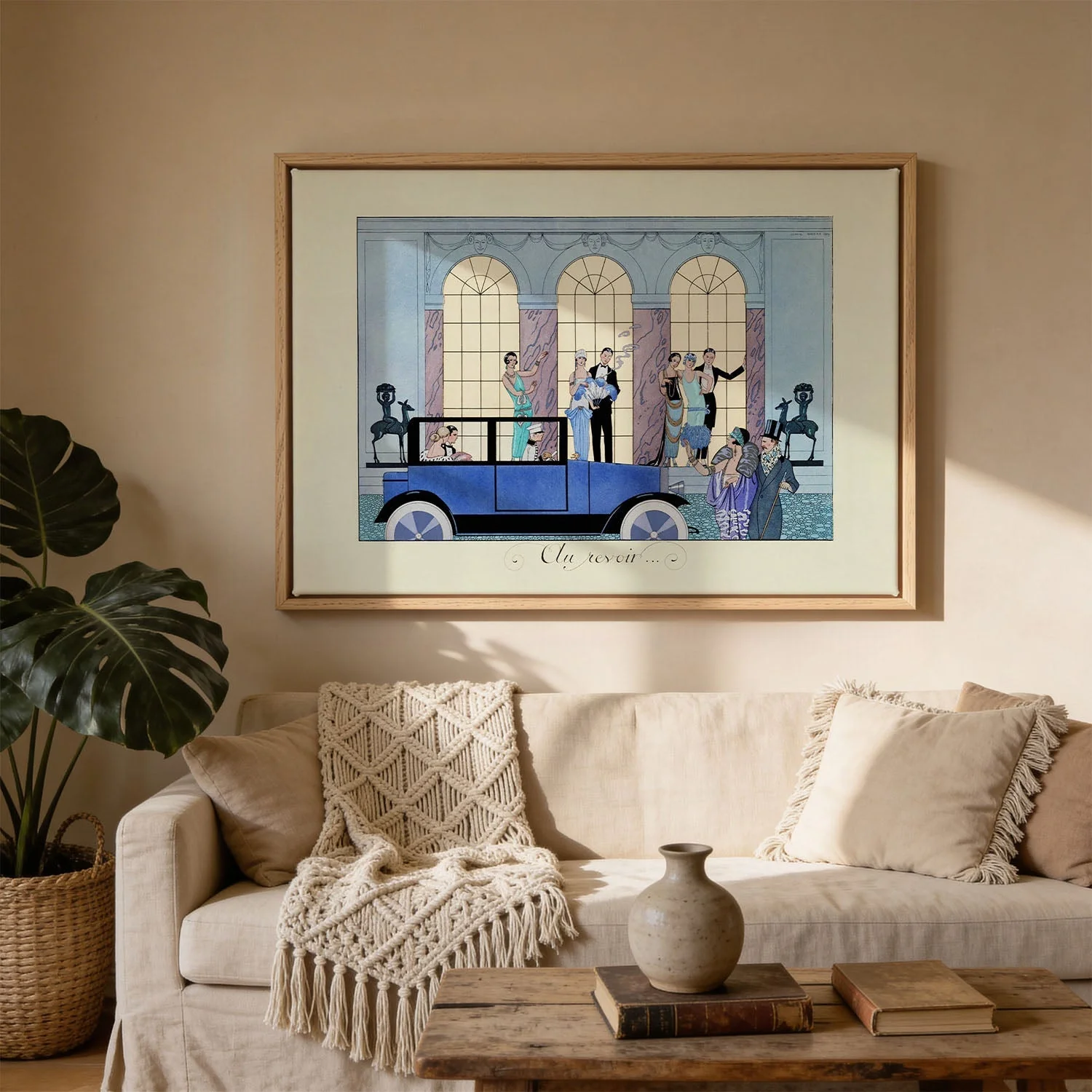
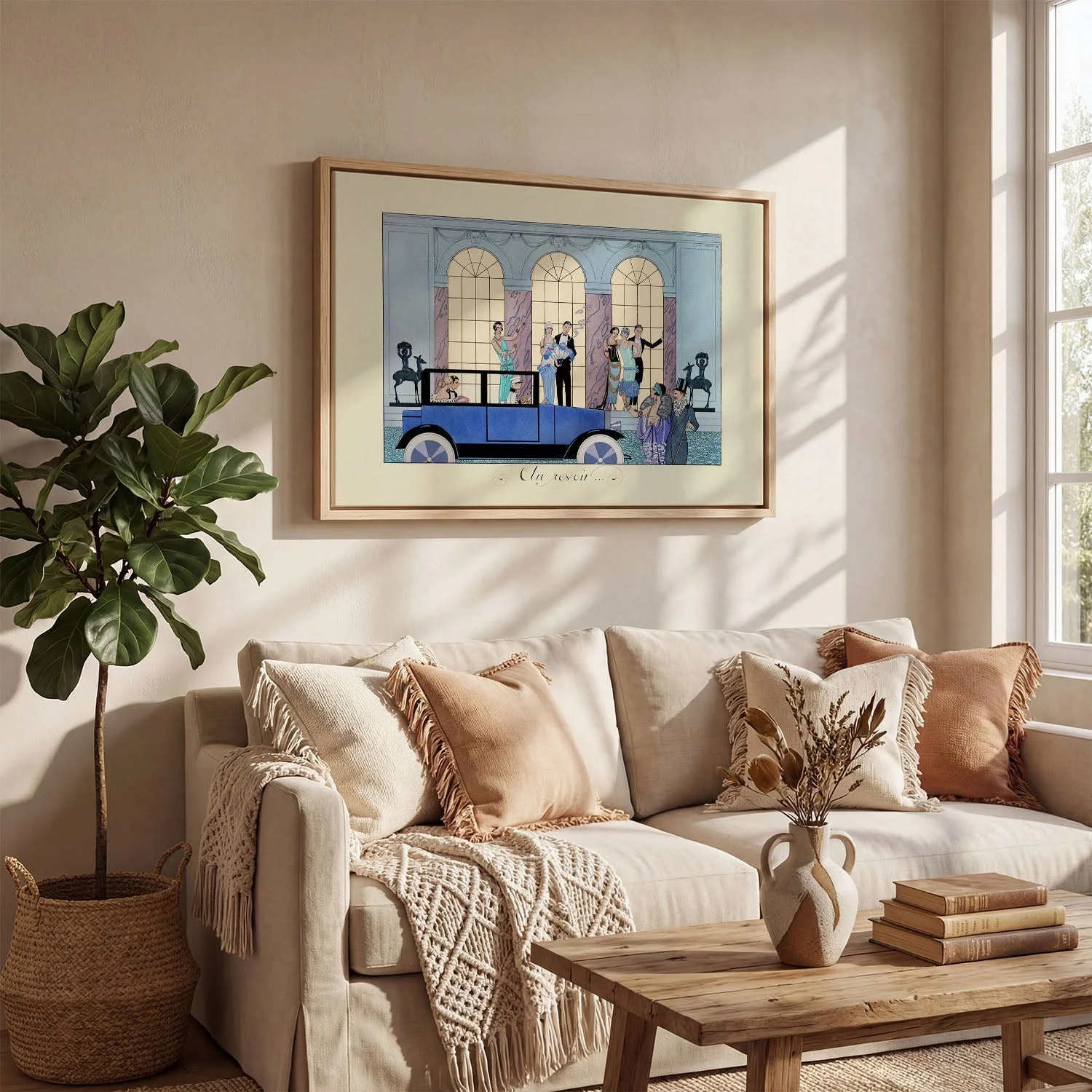
Au Revoir captures George Barbier at his most characteristic: a moment of departure staged with the theatrical elegance that defined French Art Deco illustration in the 1910s and 1920s. Two figures are caught between closeness and distance, their postures and costumes rendered with the fluid, unhurried line that was Barbier's signature. The composition is horizontal, landscape-format, giving the scene a cinematic width — figures and setting arranged like a stage set in which gesture carries all the narrative weight. The colour palette is restrained and purposeful, drawing on the japoniste influence that ran through French decorative illustration throughout this period.
Canvas suits the theatricality of Barbier's Art Deco scene. The weave lends the restrained japoniste palette a dusty, period-correct warmth, softening the fluid line just enough to feel hand-drawn rather than reproduced. As a canvas print, the cinematic horizontal composition gains the tactile depth of a painted stage flat — gestural, elegant, and quietly dramatic in a way that smoother surfaces cannot match.
Product Information
Product Information
Shipping & Returns
Shipping & Returns
Description
Au Revoir captures George Barbier at his most characteristic: a moment of departure staged with the theatrical elegance that defined French Art Deco illustration in the 1910s and 1920s. Two figures are caught between closeness and distance, their postures and costumes rendered with the fluid, unhurried line that was Barbier's signature. The composition is horizontal, landscape-format, giving the scene a cinematic width — figures and setting arranged like a stage set in which gesture carries all the narrative weight. The colour palette is restrained and purposeful, drawing on the japoniste influence that ran through French decorative illustration throughout this period.
Canvas suits the theatricality of Barbier's Art Deco scene. The weave lends the restrained japoniste palette a dusty, period-correct warmth, softening the fluid line just enough to feel hand-drawn rather than reproduced. As a canvas print, the cinematic horizontal composition gains the tactile depth of a painted stage flat — gestural, elegant, and quietly dramatic in a way that smoother surfaces cannot match.